

Abstract
Objective: Primary healthcare is a fundamental component of robust health systems and plays a key role in advancing universal health coverage (UHC) and the Sustainable Development Goals (SDGs). Family physicians and other primary care doctors require current and trustworthy evidence and therefore depend on systematic reviews of the literature. Although the number of primary healthcare–related papers has grown, information on the overall characteristics of this body of work remains limited. Bibliometric analysis combined with visualization techniques is a useful approach for mapping research trends and identifying gaps in knowledge. This study aimed to examine primary health care publications indexed in WoS that had at least one author affiliation in Türkiye (2015–2024) and to describe Türkiye’s contribution in the global context.
Methods: Scientific documents indexed in the Web of Science (WoS) under the category “Primary Health Care” and affiliated with Türkiye were retrieved for the years 2015–2024. Descriptive quantitative and qualitative analyses were carried out using standard bibliometric indicators, including publication counts, language of publication, institutional affiliations, most cited articles, authors, and journals. VOSviewer software was employed to generate a keyword co-occurrence network in order to explore research themes and their interrelations.
Results: There were 267 scientific publications produced from Türkiye between 2015 and 2024. The highest number of studies was conducted in 2023 (n: 49, 18.35%). All of the publications were in the English language, 22.47% were published in the Primary Care Diabetes, and most publications were in article form (n: 227, 85.02%). “Primary care” was the most frequently used word in the map created with the network analysis of the keywords.
Conclusion: The literature review has shown that our study is the first bibliometric study presenting publications related to primary health care from Türkiye. Overall, Türkiye’s contribution to the global PHC literature remains limited. Strengthening research capacity through targeted funding, multicenter collaborations, and diversified study designs is essential to increase both the volume and impact of PHC research from Türkiye.
Keywords: bibliometric, database, primary health care, research trends, VOSviewer
Introduction
Primary health care is conceptualized as the initial point of contact between individuals, communities, and the health system to deliver comprehensive, accessible, continuous, and well-coordinated health services.[1] As the cornerstone of a health system that treats illness, sustains well-being, and addresses health inequities rooted in social determinants, primary health care relies on family physicians as its principal providers. Monitoring current performance and developmental trajectories through scientific data informs clinical practice and contributes to health systems' sustainability.[2,3]
Bibliometric analysis is a methodological approach commonly employed to examine and interpret extensive bodies of scientific literature. It is frequently used by researchers to identify trends in journal and article performance, patterns of scientific collaboration, and the thematic composition of research, as well as to track how the structure of a given field evolves over time within the published literature. By doing so, bibliometric analysis helps to elucidate the developmental trajectory of a specific scientific topic and, at the same time, to identify newly emerging subfields and areas of inquiry related to that topic.[4,5]
In addition, visualization analyses (e.g., keyword network analysis) help identify subthemes and research gaps within a field.[6] VOSviewer converts mined bibliometric data into network maps, enabling clear visualization of keyword relationships and collaboration patterns. Combined bibliometric and network mapping analyses thus reveal key research themes, partnership dynamics, temporal trends, and existing knowledge gaps. Regularly repeating bibliometric evaluations together with keyword co-occurrence analyses is expected to support both the quantitative expansion and the qualitative improvement of overall scientific output.[7]
Although there are many studies in the primary health care category in the literature, the bibliometric characteristics of these studies have not been revealed much. It is important to conduct such studies in order to determine research areas and deficiencies. No bibliometric study has been found on this subject before, including publications from our country. In our study, we aimed to conduct a bibliometric analysis of publications on primary health care from Türkiye in the last 10 years and to determine research themes through visualization analysis.
Material and Methods
A range of electronic databases may be utilized to retrieve data for the conduct of bibliometric analyses. Web of Science (WOS) was chosen as the database because it has the “Primary Health Care” category and provides easy scanning and clear data. Scientific publications from Türkiye in the “Primary Health Care” category in the WOS database were analyzed, covering the last ten years (2015–2024). Publications were included if they had at least one author address in Türkiye (WoS Countries/Regions filter). Therefore, internationally co-authored papers were retained, and collaborating institutions from countries other than Türkiye may appear in the affiliation analysis.
The search query in WOS was:
‘WC = (Primary Health Care) AND (2024 OR 2023 OR 2022 OR 2021 OR 2020 OR 2019 OR 2018 OR 2017 OR 2016 OR 2015) AND (Countries/Regions: Turkey OR Türkiye).’
Data scanning was performed on April 18, 2025. Due to continuous updating, all data were retrieved from the database on the same day. Data were saved in an Excel worksheet for analysis. The quantitative and qualitative characteristics of the retrieved data were assessed using appropriate bibliometric indicators, including annual publication counts, document types, languages, publication venues, countries of origin, authors, affiliated institutions, and funding bodies.
For the visualization analysis, the VOSviewer software was employed; this tool compiles all keywords within the dataset and represents them by constructing a co-occurrence network of terms. Keyword co-occurrence networks were generated using VOSviewer (Leiden University, The Netherlands). The analysis type was set to co-occurrence and the unit of analysis was all keywords (as exported from the database). The counting method was full counting, and similarity normalization was performed using the association strength method (VOSviewer default). To reduce noise, a minimum occurrence threshold of 5 was applied; under this criterion, 65 keywords met the threshold and were included in the final map. Clustering and map layout were produced using VOSviewer’s default layout and clustering settings (default resolution and minimum cluster size). The visualization was generated using the program’s default randomization and iteration settings. No additional thesaurus file or external cleaning rules were applied; keywords were analyzed as exported (i.e., without manual synonym merging beyond the software’s standard handling) The keywords obtained by the bibliometric method were analyzed with the VOSviewer program, and research interests and relationships were determined.[5]
In the analysis of the collected data, frequency, percentage, and arithmetic mean values were calculated. Microsoft Excel (Microsoft 365) was used for statistical analysis. As this is a descriptive bibliometric analysis, no experimental intervention or control group was applicable.
As this investigation was based solely on document review, approval from an ethics committee was not deemed necessary. The study was carried out in accordance with the principles of the Declaration of Helsinki, as revised in 2013. No human participants or identifiable patient-level data were involved; therefore, informed consent was not applicable.
Results
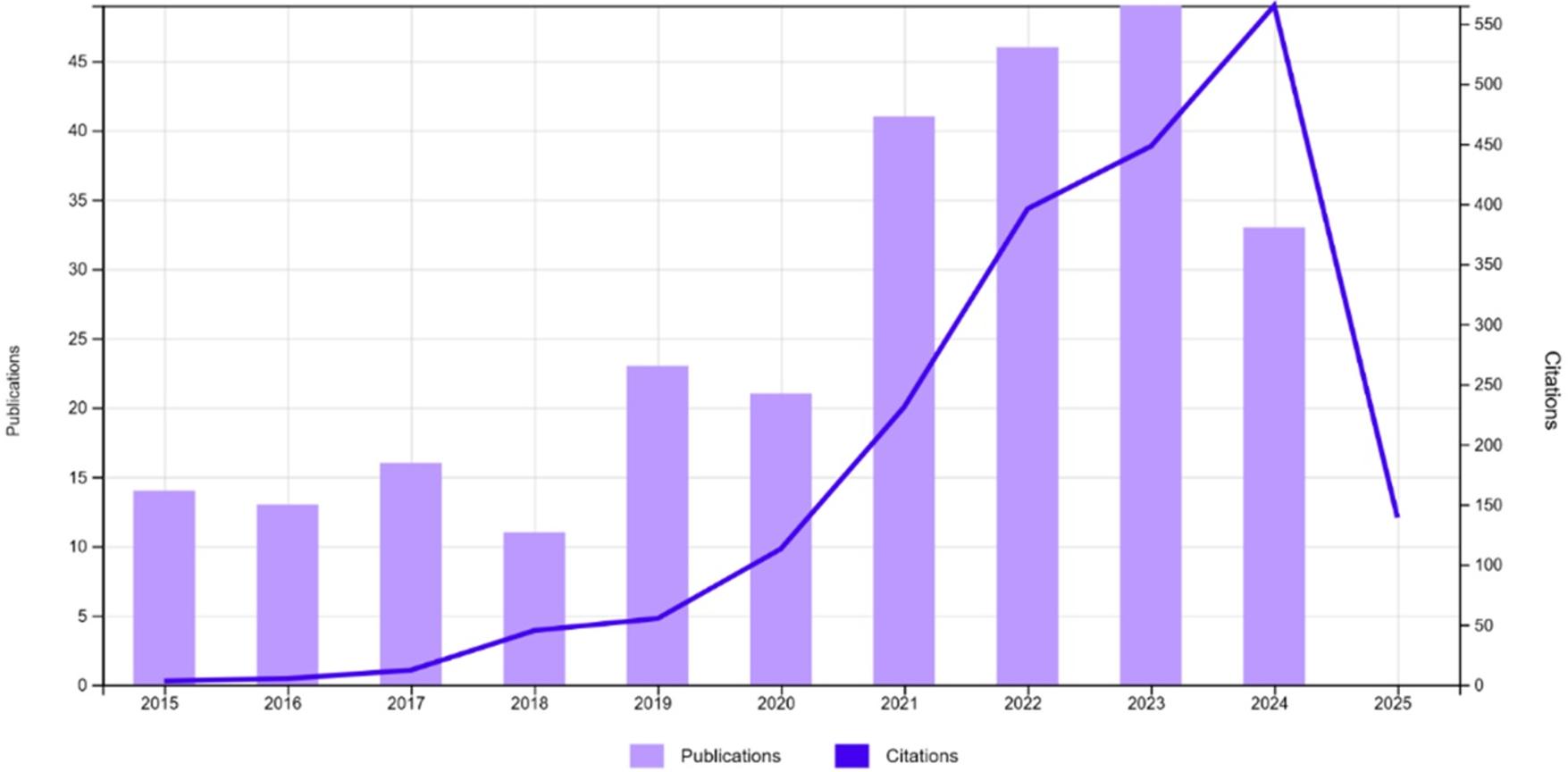
In the study, 267 scientific publications from Türkiye were identified in the Web of Science (WoS) database for the period 2015–2024 using the specified search strategy. From the Web of Science database, 109,631 records were initially retrieved; restricting the time span to the last decade reduced this set to 43,421 documents (2015–2024), and subsequent exclusion of countries other than Türkiye yielded 267 records for the bibliometric analysis. Annual publication output by year was as follows: 2015 (n=14; 5.24%), 2016 (n=13; 4.87%), 2017 (n=16; 5.99%), 2018 (n=11; 4.12%), 2019 (n=23; 8.61%), 2020 (n=21; 7.87%), 2021 (n=41; 15.36%), 2022 (n=46; 17.23%), 2023 (n=49; 18.35%), and 2024 (n=33; 12.36%), with a marked increase after 2020 and a peak in 2023. The average annual growth rate of publications (AAGRP) fluctuated across the period (2016: −0.07; 2017: 0.23; 2018: −0.31; 2019: 1.09; 2020: −0.09; 2021: 0.95; 2022: 0.12; 2023: 0.07; 2024: −0.33). The temporal trend of publications and citations is shown in Figure 1. All publications were published in English. The top ten journals publishing the most publications and their Category Quartiles are given in Table 1. 22.47% (n: 60) of the publications were published in the “Primary Care Diabetes”. The publications were published as articles (n: 227, 85.02%), letters to the editor (n: 15, 5.62%) and reviews (n: 14, 5.24%). The institution that contributed the most to the scientific literature was Marmara University with 33 articles (12.36%), followed by University of Health Sciences Turkey (n: 29, 10.86%) and Ankara University (n: 20, 7.49%). The list of institutions/organizations producing the most publications and their countries is given in Table 2. Because the dataset includes internationally co-authored publications with at least one Türkiye-based affiliation, Table 2 also reflects major collaborating institutions outside Türkiye. Vinker, Shlomo (n: 13, 4.87%) from Ariel University in Israel, Ungan, Mehmet (n: 12, 4.49%) from Ankara University in Türkiye, and Akman, Mehmet (n: 9, 3.37%) from Marmara University in Türkiye were the top three contributing authors.
| Primary Health Care Research & Development appears in two separate rows because it is associated with different JCR/WoS quartile assignments. As quartile rankings may vary across JCR years and WoS subject categories, the Q1/Q3 discrepancy reflects indexing/classification differences rather than an inconsistency in our analysis. | |||
| Table 1. The top ten journals publishing the most publications | |||
| Publication Titles |
|
|
|
| Primary Care Diabetes |
|
|
|
| Primary Health Care Research and Development |
|
|
|
| Family Medicine and Primary Care Review |
|
|
|
| European Journal of General Practice |
|
|
|
| Physician and Sportsmedicine |
|
|
|
| Family Practice |
|
|
|
| Journal of Family Medicine and Primary Care |
|
|
|
| Korean Journal of Family Medicine |
|
|
|
| Primary Health Care Research Development |
|
|
|
| Bmc Primary Care |
|
|
|
| Table 2. Top institutions/organizations by author affiliation in the included publications (including international collaborators) | |||
| Affiliations |
|
|
|
| Marmara University |
|
|
|
| University of Health Sciences Turkey |
|
|
|
| Ankara University |
|
|
|
| Hacettepe University |
|
|
|
| Istanbul University |
|
|
|
| Tel Aviv University |
|
|
|
| Dokuz Eylul University |
|
|
|
| Ege University |
|
|
|
| University of Ljubljana |
|
|
|
| Istanbul Medipol University |
|
|
|
A total of 1948 citations were made to the obtained publications. When citations were analyzed by citing year, the peak occurred in 2019 (n=565; 29%). When citations were summarized by publication year, papers published in 2021 received the highest total number of citations (41 papers; 520 citations; 26.69%). The number of publications and citation amounts by year are presented in Figure 1.
The review titled “Key recommendations for primary care from the 2022 Global Initiative for Asthma (GINA) update” published in the journal Nature Partner Journals Primary Care Respiratory Medicine (npj PCRM) was the most cited publication with 165 citations. The top ten most cited publications and their authors, year of publication, journal published, and number of citations are given in Table 3.
| Table is presented in a concise “first author et al.” format. Eight of the ten most-cited papers are led by Türkiye-affiliated first authors. The remaining two internationally led publications meet the inclusion criterion through Türkiye-based co-authorship, specifically Arzu Yorgancıoğlu (Manisa, Türkiye) in the GINA 2022 update paper and P. Topsever (Istanbul, Türkiye) in the Primary Care Diabetes Europe position statement. | |||||
| Table 3. The top 10 cited publications | |||||
| Authors | Title | Document type | Journal |
|
|
| Levy, ML et al. | Key recommendations for primary care from the 2022 Global Initiative for Asthma (GINA) update | Review | Npj Prim Care Resp M |
|
|
| Aktas, G et al. | Irritable bowel syndrome is associated with novel inflammatory markers derived from hemogram parameters | Article | Fam Med Prim Care Re |
|
|
| Bilgin, S et al. | Does C-reactive protein to serum Albumin Ratio correlate with diabEtic nephropathy in patients with Type 2 dIabetesMEllitus? The CARE TIME study | Article | Prim Care Diabetes |
|
|
| Karatas, S et al. | Impact of lockdown COVID-19 on metabolic control in type 2 diabetes mellitus and healthy people | Article | Prim Care Diabetes |
|
|
| Senisik, S et al. | The effect of isolation on athletes' mental health during the COVID-19 pandemic | Article | Physician Sportsmed |
|
|
| Kendir, C et al. | Cardiovascular disease patients have increased risk for comorbidity: A cross-sectional study in the Netherlands | Article | Eur J Gen Pract |
|
|
| Eser, E et al. | Reliability and validity of the Turkish version of the WHO-5, in adults and older adults for its use in primary care settings | Article | Prim Health Care Res |
|
|
| Duruturk, N; Özköslü, MA | Effect of tele-rehabilitation on glucose control, exercise capacity, physical fitness, muscle strength and psychosocial status in patients with type 2 diabetes: A double blind randomized controlled trial | Article | Prim Care Diabetes |
|
|
| Belviranli, M et al. | The relationship between brain-derived neurotrophic factor, irisin and cognitive skills of endurance athletes | Article | Physician Sportsmed |
|
|
| Seidu, S et al. | A disease state approach to the pharmacological management of Type 2 diabetes in primary care: A position statement by Primary Care Diabetes Europe | Review | Prim Care Diabetes |
|
|
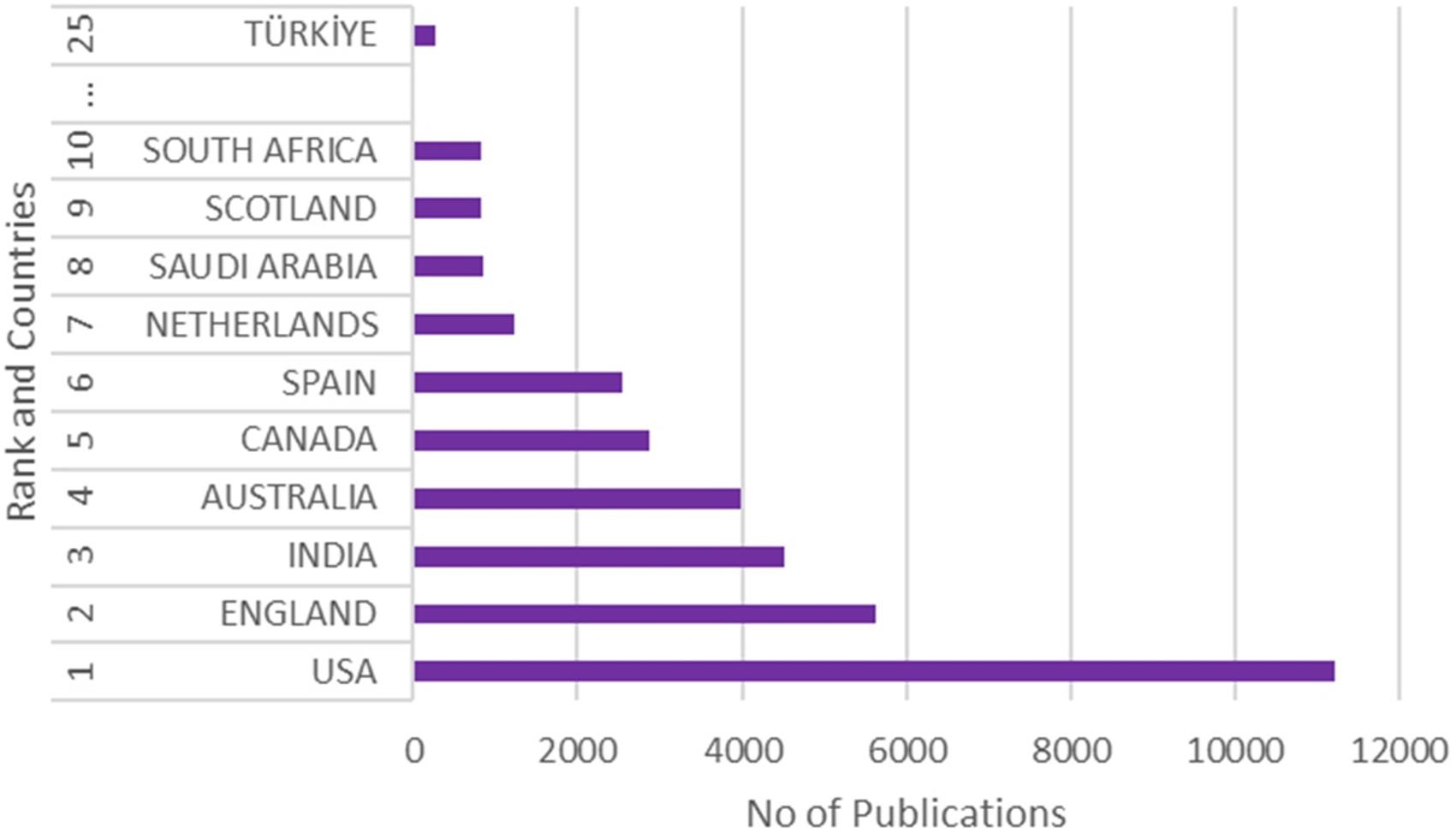
As a result of the scan we conducted on the same day with the same search strategy and without any country limitation; it was determined that a total of 43421 scientific publications were published worldwide between 2015-2024. The highest number of publications worldwide was published in 2022 (n: 5317; 12.25%). Articles from more than 176 countries were submitted to the literature worldwide. The United States (USA) ranked first with 11214 (25.83%) publications, followed by the United Kingdom and India, respectively. The top 10 countries by number of publications and the number of publications from Türkiye are shown in Figure 2. It was seen that Türkiye ranked 25th in the ranking made by the number of publications of countries with a rate of 0.61%.
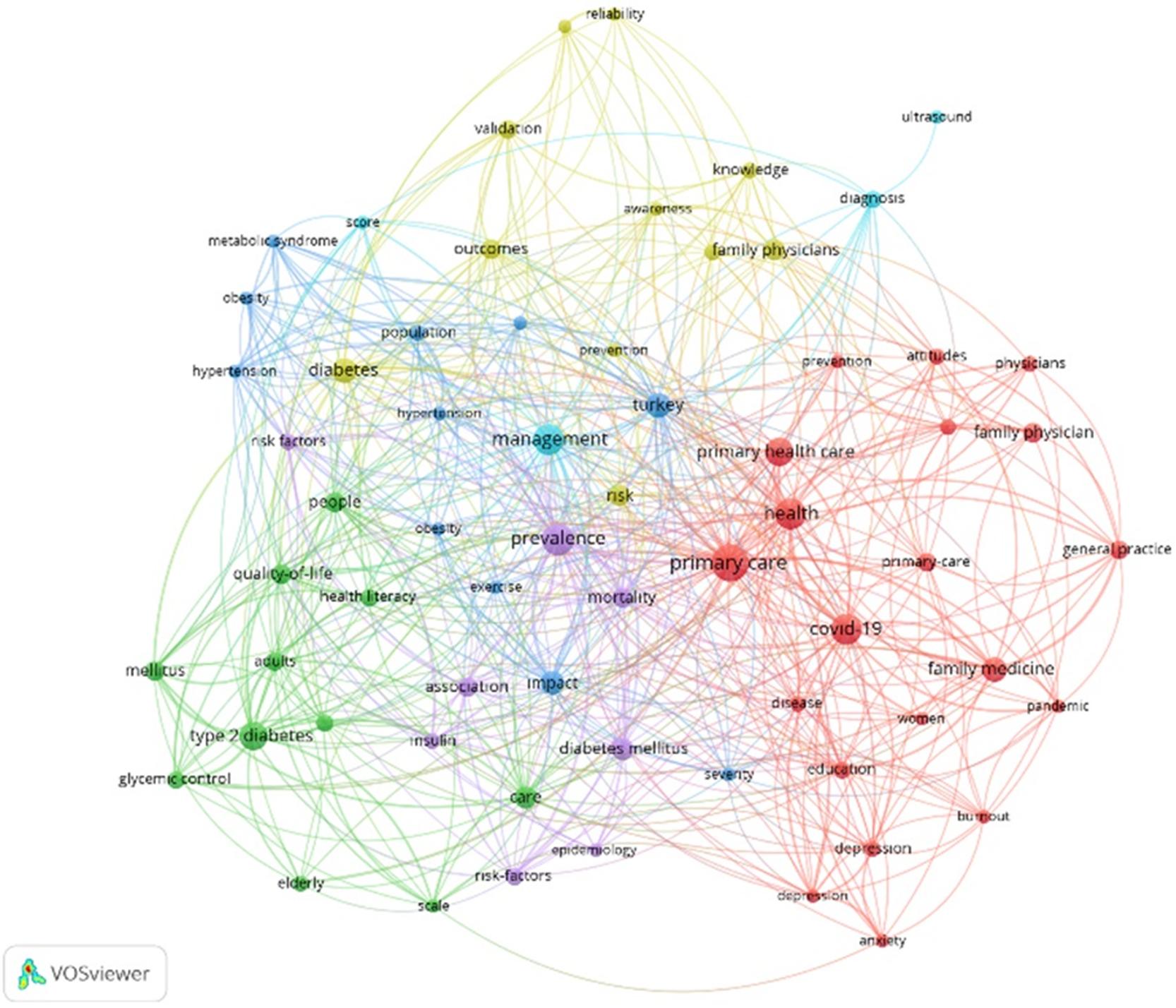
Using the VOSviewer software for keyword analysis, we identified the frequency with which individual keywords were used, the relationships among them, and the thematic structure of the resulting clusters. Figure 3 presents a network map of 65 keywords that occurred at least five times. In this map, larger circles represent more frequently used keywords, and the lines connecting the circles denote the presence of an association between terms. The distance between any two terms reflects the strength of their relationship, such that shorter connecting lines indicate a closer association.[7] In descending order, the top five most frequently used keywords were “primary care”, “prevalence”, “management”, “COVID-19”, and “health”. In terms of cluster analysis of keywords, each color represents a cluster. Six clusters were formed as a result of the analysis. The six thematic clusters and their themes are: (1) the role of primary care in the COVID-19 pandemic (red); (2) diabetes and primary care (green); (3) cardiovascular diseases (dark blue); (4) surveys assessing knowledge, attitudes, and awareness (yellow); (5) general diabetes surveys (purple); and (6) disease diagnosis and management (blue). The clusters were sorted according to their sizes as red, yellow, purple, green, navy blue, and blue.
Discussion
This bibliometric study represents the first attempt to systematically evaluate the scientific output in the field of primary healthcare (PHC) originating from Türkiye between 2015 and 2024. Our results highlight both quantitative progress and structural limitations in research productivity, particularly when compared with the global landscape.
Worldwide, more than 43,000 PHC-related articles were published during the study period, whereas Türkiye contributed only 267 (0.61%), ranking 25th globally. This disparity underscores the underrepresentation of Türkiye in international PHC research, despite the increasing visibility of family medicine as a specialty. Similar challenges have been reported in other middle-income countries. For instance, in Mexico, a bibliometric study revealed methodological weaknesses and uneven research productivity, with significant regional disparities.[8] Likewise, analyses from Thailand reported a growing trend in publications but emphasized the need for stronger health system–oriented and implementation research. Compared to these settings, Türkiye exhibits a relatively modest but steadily increasing output, peaking in 2023.[9]
The scholarly output regarding health system performance is generally intertwined with the system's inherent strength and capacity for reform. This disparity aligns consistently with findings from comparative studies, such as the PHAMEU/QUALICOPC projects, which assess the structural and procedural strength of Türkiye's PHC system as moderate to weak when benchmarked against high-performing European counterparts like the Netherlands or the United Kingdom. Specifically, these studies reveal suboptimal performance in core PHC functions, including the essential process dimensions of coordination, comprehensiveness, and continuity of care.
Consequently, the limited research output suggests a constrained analytical capacity to generate the evidence necessary for effective, data-driven policymaking, a crucial function for strengthening system performance and driving successful reforms. This calls for a prioritized investment in health system-oriented and implementation research to effectively address structural weaknesses and enhance the system's global visibility.[10-12]
Our findings show that most articles from Türkiye were published in Primary Care Diabetes, a pattern that may reflect the global predominance of chronic disease–related themes within PHC. Moreover, keyword co-occurrence analysis revealed that two major clusters were centered on diabetes-related terms, underscoring its central position in Türkiye’s PHC research landscape. This focus aligns with the substantial national burden of diabetes: recent epidemiological estimates indicate that approximately one in seven adults in Türkiye lives with diabetes, and prevalence has nearly doubled since the early 2000s. The increasing research attention to diabetes within PHC may therefore represent a response to its escalating public health significance and its integration into family medicine–based chronic disease management programs.[13]
Marmara University, University of Health Sciences Türkiye, and Ankara University emerged as the leading institutions, consistent with the observation that research capacity tends to be concentrated in a limited number of academic centers. A comparable institutional concentration was also observed in India, where a single journal (Journal of Family Medicine and Primary Care) accounted for a large volume of publications.[14] Moreover, in Switzerland, Sebo et al. found that family medicine journals often attract contributions from less experienced researchers compared to general internal medicine journals, yet still demonstrate comparable ambition in study design and sample size.[15]
Not with standing Türkiye's overall underrepresentation in the global PHC literature, the country's publication performance during the COVID-19 pandemic demands specific attention. The most frequently cited article within the Turkish dataset was the GINA 2022 asthma update, a finding that reflects the drive to integrate guideline-oriented global research into national primary care practice. Interestingly, the peak in citations coincided with the global surge in PHC publications during the pandemic, a phenomenon congruent with international bibliometric analyses that underscored the pioneering role of family physicians in the crisis response, particularly concerning prevention. Furthermore, a dedicated bibliometric analysis of Türkiye's three-year COVID-19 publication performance by Ekenoğlu Merdan and Aydoğan (2024) confirms a substantial volume of scientific work was produced in the country on this subject. The results of this analysis indicate that the Primary Health Care (PHC) field made a significant contribution to this output. Collectively, these findings affirm how global health crises rapidly mobilize the PHC research agenda and underscore the pivotal role of primary care practitioners in responding to widespread public health emergencies.[7]
The keyword network revealed six major clusters, ranging from pandemic response to chronic disease management and knowledge–attitude–practice (KAP) surveys. The predominance of “primary care,” “management,” and “prevalence” aligns with keyword structures reported in China and Thailand, where non-communicable diseases and health service delivery dominate family medicine research.[14,16] However, the relatively limited diversification of research themes in Türkiye—compared with countries such as Thailand, which demonstrated a shift from infectious disease to NCD-focused research over time—indicates a narrower research base.
The strength of Turkish PHC research lies in its consistent publication in internationally indexed journals and its focus on high-burden health conditions such as diabetes and cardiovascular disease. Nevertheless, the volume of publications remains disproportionately low compared to global trends. Furthermore, the reliance on article format (85%) with fewer reviews and editorials may limit broader theoretical and policy-level contributions. Similar concerns have been raised in bibliometric studies from Mexico and India, where research activity was quantitatively increasing but often lacked methodological rigor or diversity in article types.[9,14]
Although our study contains useful data covering 10 years of PHC publications, it has some limitations. Although only one database (the WOS database) was used in our analysis, this study nevertheless provides the first bibliometric and thematic data on PHC. It should be noted that journals not indexed in WOS, particularly those published nationally, may have been excluded from the scope of our study. In addition, self-citations were not excluded from the citation counts; therefore, the total citation metrics may be slightly overestimated.
Taken together, these findings emphasize the need for strategic initiatives to strengthen PHC research capacity in Türkiye. Establishing national and international collaborations, diversifying research methodologies, and supporting multi-center studies could improve both the quantity and quality of output. Periodic repetition of bibliometric analyses, as suggested in previous studies, will be essential to monitor progress.[13,17] Additionally, expanding research beyond clinical management to include health systems, service delivery, and medical education will ensure a more comprehensive contribution to the global PHC literature.
Despite the limitations of our study, we believe that it has been conducted in a needed area. We believe that it is important in terms of revealing the shortcomings and strengths of scientific productivity in the important field of Primary Health Care, determining the problems and solution suggestions, and guiding future projects and studies.
In conclusion, it has been revealed that our country lags behind the world in terms of research in this category and that we need to produce more publications on the subject. It is believed that periodic repetition of such studies will contribute to the development of scientific productivity in terms of quantity and quality.
Ethical approval
Since this study is a document review, ethics committee approval was not required.
Source of funding
The authors declare the study received no funding.
Conflict of interest
The authors declare that there is no conflict of interest to disclose.
References
- World Health Organization (WHO). The World Health Report 2008: primary health care - now more than ever. Geneva: WHO; 2008.
- Kidd MR, van Weel C, editors. The contribution of family medicine to improving health systems: a guidebook from the World Organization of family doctors. Oxford: Radcliffe Publishing; 2012.
- Starfield B. Primary care: Balancing health needs, services, and technology. Oxford: Oxford University Press; 1998. https://doi.org/10.1093/oso/9780195125429.001.0001
- Donthu N, Kumar S, Mukherjee D, Pandey N, Lim WM. How to conduct a bibliometric analysis: an overview and guidelines. J Bus Res. 2021;133:285-296. https://doi.org/10.1016/j.jbusres.2021.04.070
- Wang YF, Wang MH, Ho YS. A bibliometric analysis of KSHV/HHV-8 research. Collnet J Scientometr Inf Manag. 2020;14(2):219-235. https://doi.org/10.1080/09737766.2021.1920065
- Ekenoğlu Merdan Y, Özel AS, Etiz P. Bibliometric analysis of literature on HIV/AIDS-associated HHV-8/KSHV in Turkey: 2001-2020. Klimik Derg. 2023;36:75-81. https://doi.org/10.36519/kd.2023.4291
- Ekenoğlu Merdan Y, Aydoğan O. Publication trends on infective endocarditis: comprehensive bibliometric analysis and visualization between 1892 and 2022. Anatol J Cardiol. 2024;28(5):245-254. https://doi.org/10.14744/AnatolJCardiol.2024.4277
- Mendiola-Pastrana IR, López-Ortiz E, Hernández-López RG, Romero-Henríquez LF, Dávila-Mendoza R, López-Ortiz G. Analysis of scientific production in family medicine in Mexico. Publications. 2024;12(4):31. https://doi.org/10.3390/publications12040031
- Wiwatkunupakarn N, Moonkayaow S, Morse A, et al. Bibliometric analysis of scholarly publications related to family medicine in Thailand. Heliyon. 2024;10(21):e40090. https://doi.org/10.1016/j.heliyon.2024.e40090
- Bitton A, Ratcliffe HL, Veillard JH, et al. Primary health care as a foundation for strengthening health systems in low- and middle-income countries. J Gen Intern Med. 2017;32(5):566-571. https://doi.org/10.1007/s11606-016-3898-5
- Kringos DS, Boerma WG, Hutchinson A, et al. Building primary care in a changing Europe: case studies. Copenhagen: European Observatory on Health Systems and Policies; 2015.
- Hone T, Macinko J, Millett C. Revisiting Alma-Ata: what is the role of primary health care in achieving the Sustainable Development Goals? Lancet. 2018;392(10156):1461-1472. https://doi.org/10.1016/S0140-6736(18)31829-4
- Satman I, Omer B, Tutuncu Y, et al. Twelve-year trends in the prevalence and risk factors of diabetes and prediabetes in Turkish adults. Eur J Epidemiol. 2013;28(2):169-180. https://doi.org/10.1007/s10654-013-9771-5
- Mohan S, Thakur J, Mohan C, Agarwal S, Tirkey R. Journal of family medicine and primary care- A five year bibliometric analysis from 2016 to 2020. J Family Med Prim Care. 2022;11(7):3613-3621. https://doi.org/10.4103/jfmpc.jfmpc_2086_21
- Sebo P. General internal medicine and family medicine journals: comparative study of published articles using bibliometric data. Medicine (Baltimore). 2020;99(24):e20586. https://doi.org/10.1097/MD.0000000000020586
- Weng TL, Chu FY, Cheng BR, Chen TJ. The element of family medicine in the mega journal of the family medicine specialty: a bibliometric analysis of the journal, Chinese General Practice. Medicine (Baltimore). 2021;100(10):e24891. https://doi.org/10.1097/MD.0000000000024891
- Liao KY, Wang YH, Li HC, Chen TJ, Hwang SJ. COVID-19 publications in family medicine journals in 2020: a pubmed-based bibliometric analysis. Int J Environ Res Public Health. 2021;18(15):7748. https://doi.org/10.3390/ijerph18157748
Copyright and license
Copyright © 2026 The Author(s). This is an open access article distributed under the Creative Commons Attribution License (CC BY), which permits unrestricted use, distribution, and reproduction in any medium or format, provided the original work is properly cited.