

Abstract
Objective: This study aimed to examine the association between family physicians’ professional identity and Enneagram-based dominant personality types, and to explore whether professional identity scores vary across personality patterns.
Methods: This descriptive cross-sectional study was conducted between June 5-September 1, 2025, among family medicine residents and specialists who had completed residency training at the same tertiary training institution in Türkiye. Of 230 invited physicians, 218 participated (response rate: 94.8%); after excluding three outliers, analyses were performed on 215 physicians (122 residents, 93 specialists). Data were collected using a sociodemographic form, the Family Medicine Identity Scale (FMIS; 46 items; subdimensions: physician–patient communication, professional satisfaction, scope of work/comprehensive approach, biopsychosocial approach) and the Taştan Personality Type Inventory (44 items; nine Enneagram types). Due to the cross-sectional design, causal inferences cannot be drawn.
Results: No significant differences were found in total or subscale FMIS scores across any dominant Enneagram personality type (all p>0.05). Effect sizes for all non-significant comparisons were small (η² range=0.008–0.045). The mean total FMIS score was 71.28±9.35. The most frequent dominant personality types were Type 1 (27.9%) and Type 2 (25.1%).
Conclusion: These findings suggest that professional identity strength in family medicine may be shaped more by shared specialty norms and training than by dominant personality type. We recommend future longitudinal and qualitative studies to further explore how different personality types enact family medicine identity in practice.
Keywords: Social identification, family practice, personality, personality inventory
Introduction
Primary care plays a decisive role in health outcomes as the first point of contact within the health system, ensuring continuity of preventive services, chronic disease follow-up, care coordination and accessibility.[1] Although it is defined in this way in the Alma-Ata Declaration, family medicine—being a relatively new specialty with a broad scope of practice—requires further clarification of its professional definition.[2] Although the importance of family medicine is emphasized in the literature, it has been shown to be perceived as less attractive in career choices, with persistently low interest in the field. Therefore, clarifying this role within training and fostering a strong professional identity in primary care are of critical importance.[3,4] Because one of the essential prerequisites for delivering high-quality care in medical practice is the development of a robust professional identity.[5,6]
The positive development of professional identity may enhance job satisfaction and reduce the risk of burnout.[6] The literature emphasizes that physicians who strongly internalize the roles and values of family medicine communicate more effectively with their patients and advocate more convincingly for family medicine’s distinctive role within the healthcare system.[7] Family medicine identity is a dynamic construct grounded in physicians’ perceived professional roles, values, adopted attitudes, and everyday clinical practices.[8] Studies conducted among medical students and early-career physicians have shown that, despite family medicine being perceived as an important specialty for society, general practice may be considered less attractive compared to other specialties when it comes to career choice, and career intentions toward family medicine tend to remain relatively low.[3,4] This situation underscores the critical importance of more clearly defining family medicine roles and responsibilities during training. Building a strong, supported professional identity in primary care is essential both to improve the quality of care and to enhance the attractiveness of the field as a career.[3,4,7] Researchers across different countries have worked to define this construct. In Türkiye, Ustunol et al. contributed to the field by developing a new scale tailored to the Turkish context.[9]
Family medicine serves as the gateway to the health system and this role places long-term patient relationships, effective communication and advocacy at the center of practice.[10] Therefore, although communication and continuity in family medicine are guided by shared professional standards, how these processes are experienced and sustained may be influenced by physicians’ personality traits and relational styles.
Personality can be viewed as a holistic reflection of innate temperament traits and character shaped across the life course through social environments and experiences.[11,12] Although there are publications discussing the Enneagram model in medical education, particularly in relation to self-awareness and team functioning, studies evaluating it together with professional identity remain limited.[13]
The Enneagram is a personality model that classifies individuals into nine core types based on motivations, dominant fears, internal orientations, and ways of perceiving the world.[14] Greater self-awareness may help individuals recognize their preferences, stressors, strengths and limitations, supporting more effective coping and more balanced interpersonal relationships.[15,16]
Although the Enneagram provides a rich theoretical framework for understanding personality, it faces notable empirical limitations. The literature reports mixed evidence for reliability and validity, and normative data for physician populations remain absent.[17] Acknowledging these constraints, the present study utilizes the Enneagram not as a definitive diagnostic tool, but as an exploratory and complementary framework for examining physician personality dynamics. Nevertheless, specific Enneagram type characteristics may theoretically align with distinct dimensions of family medicine professional identity. Type 1’s perfectionism and rule-orientation may relate to the scope of work and comprehensive approach; Type 2’s helping orientation may connect with physician–patient communication; and Type 9’s conflict avoidance and harmony-seeking may reflect the biopsychosocial approach. Based on this framework, we posited the alternative hypothesis (H1) that different dominant Enneagram personality types would show different FMIS scores, against the null hypothesis (H0) that no such differences would exist.
Contemporary frameworks suggest that professional identity may converge despite personality differences. Cruess et al. (2019) and Sternszus et al. (2024) emphasize that professional identity formation is shaped through socialization within educational environments and shared role expectations — processes that may overshadow individual personality-driven differences in identity scale scores.[8,18]
The balance between inherent personality patterns and educational influences in professional identity formation (PIF) offers a valuable perspective for medical training.[17,19] If identity were viewed as a largely stable construct, residency programs might prioritize selection based on specific profiles.[17] Conversely, treating character structure as a dynamic growth process—as suggested in Enneagram literature—allows curriculum design to focus on self-reflective interventions.[17,19] Preliminary evidence suggests that such developmental approaches may enhance communication skills and interpersonal growth within healthcare contexts.[17] Furthermore, identifying underlying motivations could enable faculty to provide more balanced mentorship tailored to the individual developmental needs of residents.[19]
This study aimed to examine the association between family physicians’ professional identity and Enneagram-based personality patterns, and to explore the extent to which professional identity is shared and under which conditions individual differences become more pronounced. To the best of our knowledge, no previous study has examined the relationship between family medicine professional identity and Enneagram-based personality typologies. Understanding whether professional identity dimensions co-vary with personality patterns may offer valuable insights for residency training. If identity were primarily shaped by stable personality traits, training programs might benefit from tailored approaches for different personality profiles. Conversely, if identity develops largely through shared training experiences and socialization, this would support the design of uniform educational interventions aimed at strengthening professional identity regardless of incoming personality characteristics. The present study thus addresses a gap in the literature and provides a framework for interpreting how convergence or divergence in identity scores relates to both personality and contextual factors in primary care training.
Materials and Methods
This descriptive cross-sectional study was conducted between June 5, 2025 and September 1, 2025. Participants were family medicine residents at a tertiary care training hospital in Türkiye and family medicine specialists who had completed residency training at the same institution.
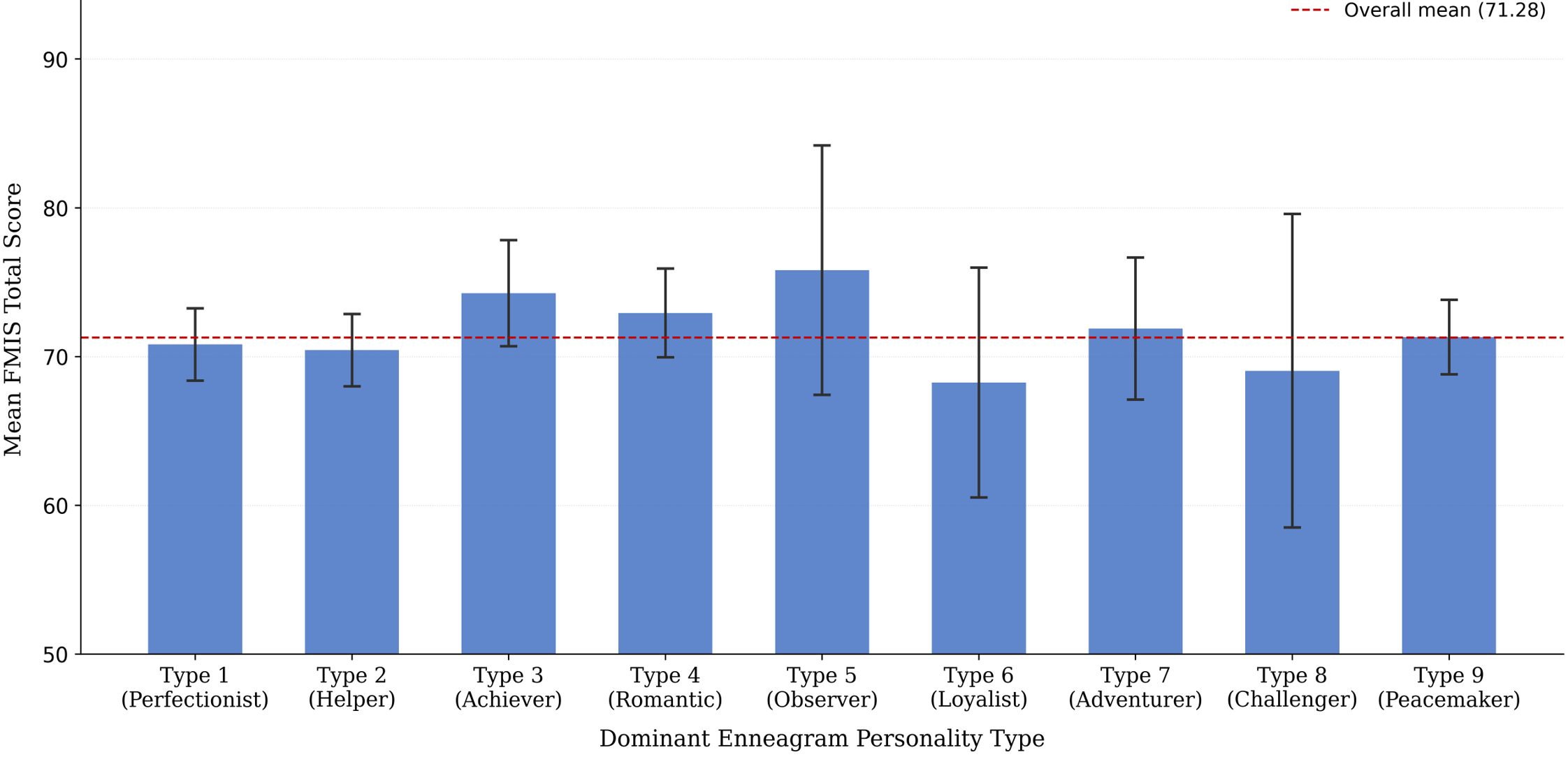
A sample size calculation using G-Power 3.1.9.7 (effect size=0.50; α=0.05; power=95%) indicated a minimum required sample of 210 participants; assuming 10% data loss, the target sample size was set at 230. Of 230 invited physicians, 218 participated (response rate: 94.8%); three participants were identified as outliers based on examination of skewness and kurtosis values and Q-Q plots of scale scores, and were excluded; analyses were conducted on the remaining 215 participants. Of these, 122 were residents and 93 were specialists. Informed consent was obtained from all participants (Figure 1). No missing data were identified.
The study was conducted using a digital survey technique and a supervised questionnaire administration method. Data were collected via Google Forms. Participant anonymity and data confidentiality were maintained by ensuring that no identifying information was recorded. Informed consent was obtained electronically prior to participation; participants were informed of the voluntary nature of the study, their right to withdraw at any time without consequence, and that no incentives were offered. Participants completed a researcher-developed sociodemographic information form (age, sex, marital status, years in medical practice [defined as total years elapsed since graduation from medical school], years in residency/specialist practice, academic status and specialists’ workplace), the Family Medicine Identity Scale (FMIS) and the Taştan Personality Type Inventory (TPTI).
FMIS is a 46-item instrument that quantitatively assesses the level of professional identity development based on family physicians’ responses. The scale comprises the following subdimensions: physician–patient communication, professional satisfaction, breadth of practice and comprehensive approach, and biopsychosocial approach. Developed by Dr. Ustunol in 2019, the FMIS uses a five-point Likert format. Response options are "Strongly Agree", "Agree", "Partly Agree", "Disagree" and "Strongly Disagree".[9]
TPTI is a 44-item, 7-point Likert instrument based on the Enneagram approach, scored from 0 ("Strongly disagree") to 6 ("Strongly agree"), that assesses nine personality types. The scale was developed by Taştan et al. in 2013. Items are grouped into nine types: the perfectionist, the helper, the achiever, the romantic, the observer, the loyalist, the adventurer, the challenger and the peacemaker.[15]
The necessary permissions were obtained from the scale owners. For the TPTI, the dominant personality type was determined as the type with the highest raw score; no ties were observed in the current sample. Homogeneity of variances was assessed using Levene's test prior to all ANOVA comparisons; when homogeneity was met, the Scheffé post-hoc test was applied, and when it was not, Tamhane’s T2 was used.
Analyses were performed using IBM SPSS Statistics 22. Categorical variables were summarized as numbers and percentages, and continuous variables as mean ± standard deviation and minimum–maximum values.
For comparisons between two groups, the independent-samples t-test was used and for comparisons among more than two groups, one-way ANOVA was applied. When the assumption of homogeneity of variances was met, the Scheffé post-hoc test was used; otherwise, Tamhane’s T2 was applied. Associations between continuous variables were assessed using Pearson correlation and associations between categorical variables were evaluated using the chi-square/Fisher’s exact test, as appropriate. A p value < 0.05 was considered statistically significant. Internal consistency of the instruments in the current sample was evaluated using Cronbach’s alpha. The FMIS demonstrated high reliability overall (α=0.944) and across its subscales: physician–patient communication (α=0.886), professional satisfaction (α=0.817), scope of work and comprehensive approach (α=0.763), and biopsychosocial approach (α=0.816). The TPTI also showed adequate internal consistency (α=0.827).
The sample size was calculated to detect a moderate effect (Cohen's f = 0.50); accordingly, the study was not powered to detect small effects (e.g., Cohen's f = 0.20–0.30), which may have gone undetected. Given the exploratory nature of the analysis, we did not adjust for multiple comparisons; however, all reported p-values remain non-significant even under conservative correction (e.g., Bonferroni α = 0.05/36 = 0.0014). This study was reported in accordance with the STROBE (Strengthening the Reporting of Observational Studies in Epidemiology) checklist for cross-sectional studies. In our study, the null hypothesis (H0) stated that there is no statistically significant association between dominant Enneagram personality type and the level of family medicine identity, whereas the alternative hypothesis (H1) stated that such an association exists.
The study was approved by the local ethics committee on 04 June 2025 (approval no: 1-25-1385).
Results
A total of 215 physicians were included. Overall, 68.8% were female, 31.2% male; 37.7% were single, 60.9% married, and 1.4% divorced/widowed. In terms of academic status, 56.7% were residents and 43.3% specialists. Among specialists, 24.7% worked in a Family Health Center (FHC), 35.5% in a hospital, 36.6% in a District Health Directorate (DHD)/Community Health Center (CHC) and 3.2% in other settings. The mean age was 30.61 ± 3.27 years; mean years in practice 5.35 ± 2.91; mean years in residency 2.05 ± 1.04 and mean years as a specialist 2.39 ± 1.24 (Table 1).
| FHC: Family Health Center, DHD: District Health Directorate, CHC: Community Health Center | |||
| Table 1. Descriptive statistics on the sociodemographic characteristics of physicians. | |||
| Sociodemographic Characteristics |
|
|
|
| Gender | Female |
|
|
| Male |
|
||
| Marital Status | Single |
|
|
| Married |
|
||
| Divorced/Widowed |
|
||
| Academic Status | Family Medicine Resident |
|
|
| Family Medicine Specialist |
|
||
| Specialists’ Workplace | FHC |
|
|
| Hospital |
|
||
| DHD/CHC |
|
||
| Other |
|
||
| Age (years) |
|
||
| Years in Medical Practice |
|
||
| Years in Residency |
|
||
| Years as Specialist |
|
||
Descriptive statistics for physicians’ total and subscale scores on the FMIS (n, mean, standard deviation, minimum, and maximum) are presented in Table 2. The mean FMIS subscale scores were 72.86 ± 9.47 for physician–patient communication, 63.08 ± 11.74 for professional satisfaction, 73.67 ± 9.79 for scope of work and comprehensive approach and 78.29 ± 13.82 for the biopsychosocial approach. The mean total FMIS score was 71.28 ± 9.35.
| Table 2. Examination of descriptive statistics for the family medicine identity scale. | ||||
| Subdimensions |
|
|
|
|
| Physician-Patient Communication (Factor 1) |
|
|
|
|
| Professional Satisfaction (Factor 2) |
|
|
|
|
| The Scope of Work and Comprehensive Approach (Factor 3) |
|
|
|
|
| Biopsychosocial Approach (Factor 4) |
|
|
|
|
| Total Scale |
|
|
|
|
The lowest and highest mean scores were observed for Item 23 (“Being easily accessible for my patients positively affects the patient–physician relationship”, mean=2.60) and Item 38 (“I think specialist training is necessary for the formation of a family medicine identity”, mean=4.33), respectively. Clinically, the low score for Item 23 suggests that physicians do not view accessibility as the primary driver of the patient–physician relationship, while the high score for Item 38 reflects a strong sense of family medicine as a distinct specialty grounded in specialized training. Mean scores were also below 3.0 for Item 32, “Family medicine is a way of life for me” (mean=2.93), and Item 4, “I think I get enough respect in the eyes of patients” (mean=2.76) (Table 3).
| FMIS: Family Medicine Identity Scale | |||
| Table 3. Notable items in physicians’ responses to the FMIS. | |||
| FMIS Items |
|
|
|
| Item 4 | I think I get enough respect in the eyes of patients. |
|
|
| Item 23 | Being easy to reach the doctor for my patients affects the patient-physician relationship positively. |
|
|
| Item 32 | Family medicine is a way of life for me. |
|
|
| Item 38 | I think it is necessary to receive specialist training for the formation of a family medicine identity. |
|
|
According to the Tastan Personality Types Inventory (TPTI), 27.9% of the physicians were classified as “the perfectionist” (type 1), 25.1% as “the helper” (type 2), 9.8% as “the achiever” (type 3), 1.9% as “the romantic” (type 4), 3.7% as “the observer” (type 5), 4.7% as “the loyalist” (type 6), 8.4% as “the adventurer” (type 7), 2.8% as “the challenger” (type 8) and 15.8% as “the peacemaker” (type 9) (Table 4).
| TPTI: Tastan Personality Types Inventory | |||
| Table 4. Examination of physicians’ personality types according to the TPTI. | |||
| Variables |
|
|
|
| Personality Types | The Perfectionist |
|
|
| The Helper |
|
|
|
| The Achiever |
|
|
|
| The Romantic |
|
|
|
| The Observer |
|
|
|
| The Loyalist |
|
|
|
| The Adventurer |
|
|
|
| The Challenger |
|
|
|
| The Peacemaker |
|
|
|
| Total |
|
|
|
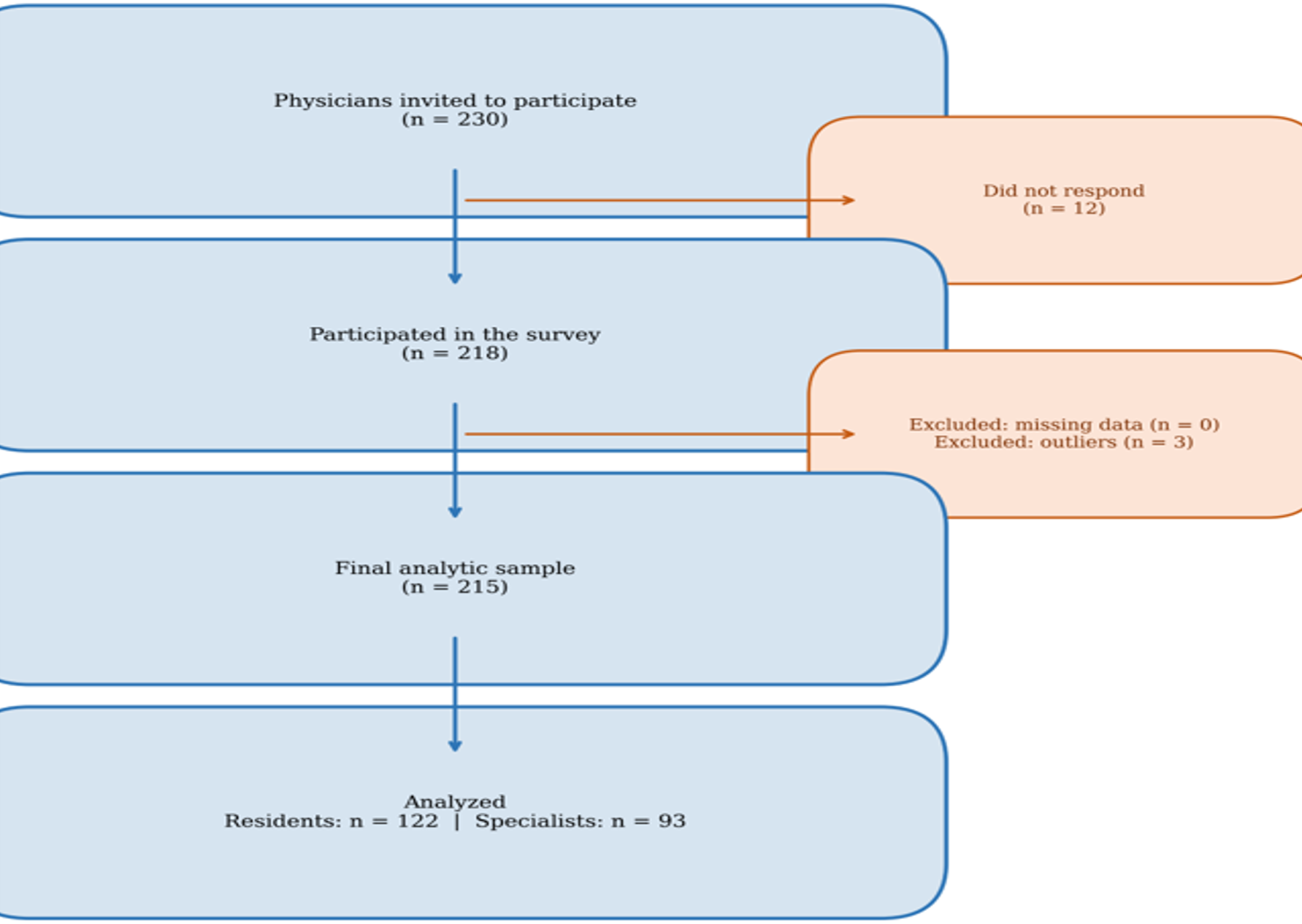
FMIS total and subdimension scores did not differ significantly according to physicians’ academic status. Among specialists, FMIS scores were similar across workplaces except for professional satisfaction (p=0.021). Post hoc tests indicated lower mean professional satisfaction scores in DHD/CHC (60.11) than in FHC (67.91) and hospitals (65.33). In correlation analyses, age showed very weak negative correlations with FMIS physician–patient communication (r=−0.149, p=0.029), scope of work and comprehensive approach (r=−0.175, p=0.010), and total score (r=−0.150, p=0.028); these correlations explained less than 3% of the variance (r² < 0.03) and should not be interpreted as clinically meaningful. In contrast, no significant associations were observed between FMIS subdimensions/total scores and the number of years spent in medical practice, residency or specialist practice (Table 5, Table 6 and Figure 2).
|
*: The statistically significant difference was defined as p < 0.05 t: Independent Sample T Test, F: One Way ANOVA, r: Pearson Correlation Test FMIS: Family Medicine Identity Scale, FHC: Family Health Center, DHD: District Health Directorate, CHC: Community Health Center |
||||||
| Table 5. Comparison of FMIS scores according to physicians’ sociodemographic characteristics. | ||||||
| Variables |
|
|||||
|
|
|
|
|
|
||
| Academic Status | Resident (n=122) |
|
|
|
|
|
| Specialist (n=93) |
|
|
|
|
|
|
| t |
|
|
|
|
|
|
| p* |
|
|
|
|
|
|
| Specialists’ Workplace | FHC (n=23) |
|
|
|
|
|
| Hospital (n=33) |
|
|
|
|
|
|
| DHD/CDC (n=34) |
|
|
|
|
|
|
| F |
|
|
|
|
|
|
| p* |
|
|
|
|
|
|
|
*: The statistically significant difference was defined as p < 0.05 t: Independent Sample T Test, F: One Way ANOVA, r: Pearson Correlation Test FMIS: Family Medicine Identity Scale, FHC: Family Health Center, DHD: District Health Directorate, CHC: Community Health Center |
||||||
| Table 6. Comparison of FMIS scores according to physicians’ sociodemographic characteristics. | ||||||
| Variables |
|
|||||
|
|
|
|
|
|
||
| Age (n=215) | r |
|
|
|
|
|
| p* |
|
|
|
|
|
|
| Years in Medical Practice (n=215) | r |
|
|
|
|
|
| p* |
|
|
|
|
|
|
| Years in Residency (n=122) | r |
|
|
|
|
|
| p* |
|
|
|
|
|
|
| Years as Specialist (n=93) | r |
|
|
|
|
|
| p* |
|
|
|
|
|
|
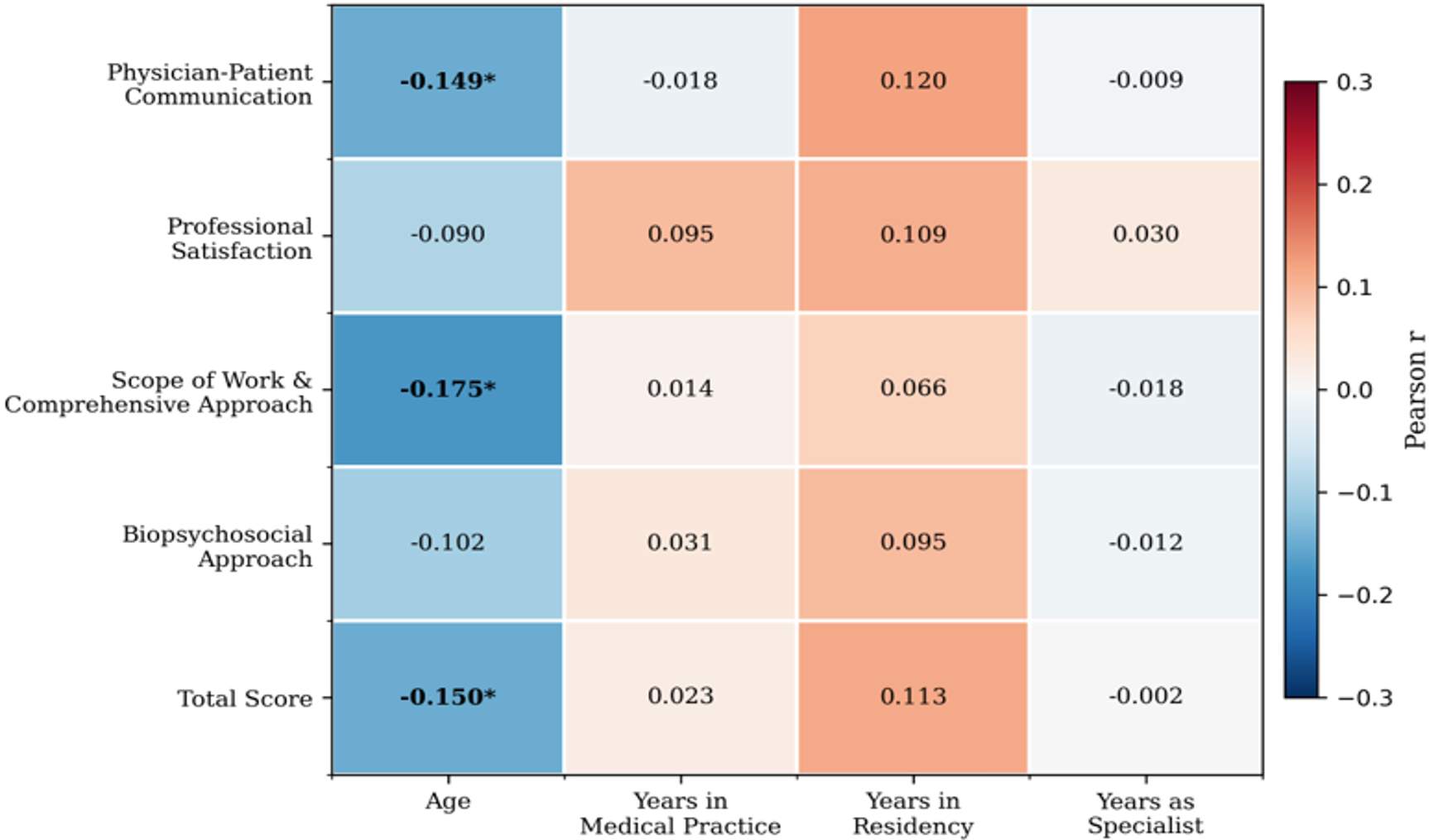
A significant association was found between physicians’ personality type and gender (p=0.034) as well as marital status (p=0.002). Effect sizes were small for both associations (Cramér’s V=0.265 for gender; Cramér’s V=0.194 for marital status), indicating limited practical magnitude. A sensitivity analysis excluding the two smallest personality type groups (Type 4, n=4; Type 8, n=6) yielded consistent null findings for FMIS comparisons across personality types. The most common type among women was the “helper” (29.1%, n=43), whereas among men it was the “perfectionist” (37.3%, n=25). By marital status, the “peacemaker” was most frequent among single physicians (24.7%, n=20), while the “perfectionist” predominated among married (29.8%, n=39) and divorced/widowed physicians (66.7%, n=2) (Table 7). Regarding our primary outcome, FMIS total and subscale scores did not differ significantly across personality types (Table 8, Supplementary Table S1 and Figure 3): physician–patient communication (F=0.584, p=0.791), professional satisfaction (F=0.870, p=0.543), scope of work and comprehensive approach (F=1.236, p=0.280), biopsychosocial approach (F=0.220, p=0.987), and total score (F=0.765, p=0.634). Effect sizes for all non-significant comparisons were small (η² range=0.008–0.045).
|
p*=0.034, Fisher Exact=16.606 (Gender) | p*=0.002, Fisher Exact=9.207 (Marital Status) Cramér’s V=0.265 (Gender); Cramér’s V=0.194 (Marital Status) The statistically significant difference was defined as p < 0.05 S: Single, M: Married, D/W: Divorced/Widowed, FMIS: Family Medicine Identity Scale |
|||||||
| Table 7. Examination of the association between physicians’ personality types and selected sociodemographic characteristics. | |||||||
|
|
|
|
|
|
|
|
|
| The Perfectionist |
|
|
|
|
|
|
|
| The Helper |
|
|
|
|
|
|
|
| The Achiever |
|
|
|
|
|
|
|
| The Romantic |
|
|
|
|
|
|
|
| The Observer |
|
|
|
|
|
|
|
| The Loyalist |
|
|
|
|
|
|
|
| The Adventurer |
|
|
|
|
|
|
|
| The Challenger |
|
|
|
|
|
|
|
| The Peacemaker |
|
|
|
|
|
|
|
| Total |
|
|
|
|
|
|
|
|
The statistically significant difference was defined as p < 0.05 F: One Way ANOVA, η²: eta squared (effect size). Full means and standard deviations for each personality type are presented in Supplementary Table S1. FMIS: Family Medicine Identity Scale |
||||
| Table 8. Comparison of FMIS scores according to physicians’ personality types. | ||||
| FMIS Subdimension |
|
|
|
|
| Physician–Patient Communication (Factor 1) |
|
|
|
|
| Professional Satisfaction (Factor 2) |
|
|
|
|
| Scope of Work and Comprehensive Approach (Factor 3) |
|
|
|
|
| Biopsychosocial Approach (Factor 4) |
|
|
|
|
| Total Score |
|
|
|
|
Discussion
In this study, we aimed to examine the relationship between Enneagram-based dominant personality types and scores on the Family Medicine Identity Scale among family physicians. To the best of our knowledge, no studies have examined the relationship between family medicine professional identity and Enneagram-based personality types in the literature.
Considering the relationship between professional identity and personality typologies, Everett et al. compared Enneagram personality types with multidimensional professionalism and interpersonal communication measures among general surgery residents and found no significant associations.[20]
Similarly, our study found no significant differences in FMIS subdimension or total scores across dominant Enneagram types. This does not imply that family medicine professional identity is independent of personality; rather, shared training goals, role expectations, and clinical practice norms within the specialty may have contributed to the convergence of identity scores across groups. Contemporary perspectives emphasize that professional identity is a dynamic construct shaped through socialization and influenced by contextual factors such as educational and workplace conditions, team interactions and feedback.[18,21]
Examining the highest- and lowest-scoring FMIS items, the low scores for Item 4 and Item 32 suggest a link between societal recognition of family medicine and physicians’ internalization of their professional role. Low perceived respect from patients may reflect limited visibility and perceived value of the family physician role, which is closely related to professional satisfaction. Consensus work highlights mutual trust and respect in the physician–patient relationship and recognition of family medicine as a reputable specialty as key determinants of job satisfaction.[22] Moreover, the blurring of role boundaries may limit physicians’ ability to define their profession as an identity and to internalize family medicine as a “way of life”.[23]
The lowest and highest mean scores were observed for Item 23 and Item 38, respectively. The low mean score for Item 23 does not suggest that family physicians view accessibility as unimportant; rather, it indicates that accessibility alone is not seen as the key driver of the patient–physician relationship. Clinically, this underscores that mutual trust and continuity of care built over time are more central to family medicine identity than structural elements such as rapid communication. Continuity literature highlights that mutual familiarity between patients and physicians is more critical than the quantity of access.[24]
Item 38 had the highest mean score, suggesting that participants view family medicine as a distinct specialty with specific competencies. Clinically, this indicates that professional identity in family medicine is not merely a workplace definition but is grounded in standardized medical expertise acquired through specialty training. Consistent with this, Ustunol et al. developed the scale within the World Organization of National Colleges, Academies, and Academic Associations of General Practitioners/Family Physicians (WONCA) core competency framework, linking professional identity not only to the practice setting but also to competencies acquired through specialty training.[9]
We found no association between academic status and professional identity scores. Similarly, Nazlıgül and Ayraler (2023) reported that academic status was not a determinant of family physicians’ professional satisfaction or professional self-concept.[25] This may reflect early internalization of core clinical responsibilities and care philosophy during training, resulting in residents’ identity scores comparable to those of specialists.
Emiroglu and Pala reported that physicians working in FHCs in Bursa had lower professional satisfaction than those in other settings.[26] In our study, however, specialists working in DHD/CHCs had lower professional satisfaction than those in FHCs and hospitals. This finding should be interpreted as hypothesis-generating rather than conclusive, given the small subgroup size (DHD/CHC: n=34) and the fact that this was one of multiple workplace comparisons across four FMIS subscales. Nevertheless, this pattern may tentatively reflect a greater focus on administrative coordination and reporting and less clinical continuity and direct patient contact in DHD/CHC settings.
Age showed a negative association with professional identity scores, whereas Li et al. reported higher professional identity with increasing age.[27] This discrepancy may reflect early-career enthusiasm declining over time as work-related challenges accumulate, potentially undermining professional identity.
Among the 215 physicians, the most common personality types according to the TPTI were the perfectionist and the helper, whereas the romantic and the challenger types were observed at lower rates. This distribution resembles the profile reported by Taştan in a mixed sample using the same inventory, with Type 1 (the perfectionist) and Type 2 (the helper) being the most prominent types in both samples.[15] The higher proportion of Type 1 compared with Type 2 in our physician sample may tentatively reflect the structural demands of the profession; aspects of family medicine such as responsibility, organization, and adherence to rules could potentially be associated with this pattern, though this interpretation remains speculative given the sample size. This pattern is also consistent with findings from studies examining the relationship between Enneagram types and medical specialty choice. On the other hand, the relatively high proportion of Type 9 (the peacemaker) in our sample may tentatively reflect key demands of family medicine—conflict avoidance, a conciliatory role, and sustaining long-term patient–physician relationships—though causal interpretations should be made with caution. Likewise, Bacık et al. reported that physicians with a Type 9 profile more often prefer specialties perceived as having lower workload and acute stress (e.g., family medicine, radiology, psychiatry, pathology).[28]
The low frequency of Type 8 in our sample is consistent with studies suggesting that Type 8—characterized by traits such as “risk-taking, rapid decision-making and assertiveness/strength”—is expected to be more common in surgical specialties.[28] In fields such as family medicine, where procedural intensity is relatively lower and team authority/hierarchical structures differ from those in surgical disciplines, it may be expected that Type 8–like patterns are less represented. The low frequency of Type 4 may be related to the relatively low sensitivity reported for discriminating Type 4 (66.7%) in the validity study of the TPTI.[15]
When personality type categories were compared with sociodemographic variables, a significant association was found between dominant personality type and gender. Type 2 was more prevalent among women, whereas the Type 1 was more prevalent among men. In a Turkish sample, Type 1 was reported to be more common in men and a study conducted among physicians similarly found that Type 1 was more frequent in men and Type 2 in women.[28,29] Together, these findings suggest that the distribution observed in our study is consistent with the literature and may represent a reproducible pattern.
The higher prevalence of Type 1 among married physicians may indicate that Type 1’s emphasis on order and responsibility could be associated with maintaining long-term relationships. The higher prevalence of Type 9 among single physicians does not indicate a direct causal relationship. However, this finding may be interpreted as a pattern consistent with Type 9’s characteristics related to avoiding interpersonal conflict and maintaining harmony. Alexander and Schnipke noted that, in clinical/interpersonal contexts, Type 9 is conceptualized in terms of these tendencies. These tendencies may become more salient in relationship formation and maintenance processes, particularly when the goal of avoiding conflict/tension is predominant.[30]
Limitations
Study limitations include limited generalizability due to the small sample sizes in certain personality types and subgroups and the restriction of the sample to a single clinic. Furthermore, findings may not be directly transferable to healthcare systems with different family medicine training structures, levels of societal recognition, or degrees of professional autonomy. The sample size was calculated to detect moderate effects (Cohen's f = 0.50); accordingly, the study was not powered to detect small effects (e.g., d = 0.20–0.30), which may have gone undetected. Small but clinically relevant differences between personality types therefore cannot be ruled out. It should also be noted that personality assessments such as the Enneagram, if misused, could contribute to stigmatization, labeling, or biased selection decisions. The findings of the present study do not support the use of the Enneagram as a selection or screening tool for family medicine residency programs. Finally, given the exploratory nature of this study and the absence of validated interpretive thresholds for the FMIS, it was not possible to determine what magnitude of score difference would constitute a clinically or educationally meaningful change. As the FMIS is the first scale developed in Türkiye for this domain, no established minimal clinically important difference (MCID) currently exists. Accordingly, statistical thresholds were used as the primary basis for assessing group differences, and longitudinal studies are needed to establish score ranges corresponding to meaningful distinctions in practice. A key measurement limitation also warrants acknowledgment: the FMIS assesses the strength of agreement with professional identity statements, not the behavioral expression or stylistic enactment of identity. It remains possible that different Enneagram types express family medicine identity in qualitatively different ways — for instance, a Type 1 physician may emphasize rule-based comprehensiveness while a Type 2 may prioritize empathetic communication — while still producing identical Likert-scale scores. Future research employing qualitative or observational methods may better capture such stylistic differences. In addition, assessing the Enneagram solely based on “dominant type” classification may fail to capture finer variations in personality patterns (e.g., wing features and stress/security orientations). Additionally, the low frequency of Type 4 (romantic) and Type 8 (challenger) in our sample may reflect true population differences or measurement artifacts of the TPTI; the relatively low sensitivity reported for Type 4 (66.7%) in the original validation study suggests that its low frequency should be interpreted with caution. The absence of a comparison group from other medical specialties represents a further limitation. Without a control group (e.g., surgical residents or internists), it remains unclear whether the absence of personality–identity associations is specific to family medicine or generalizable across specialties. Finally, because the measures were self-report–based, social desirability and response biases may have influenced both the personality and identity scales. Physicians may have endorsed items presenting themselves favorably — as empathetic, rule-following, or harmonious — potentially inflating the prevalence of certain Enneagram types (e.g., Type 1, Type 2, Type 9) and reducing variability in both personality and identity scores.
Conclusion
In this study, we aimed to examine the association between Enneagram-based personality patterns and the subdimensions of family medicine professional identity and to provide an integrated framework describing how these patterns co-occur with demographic and professional variables. Our results do not support a simple, direct association between dominant Enneagram personality type and the strength of professional identity in family medicine, as measured by the FMIS. This suggests that contextual factors, including residency training, shared role expectations, and clinical practice norms, may overshadow personality-driven differences in identity scale scores. These findings should be interpreted in light of several limitations, including the single-center design, small subgroup sizes for certain personality types (Type 4, n=4; Type 8, n=6), the potential for self-report bias, and the absence of multiple comparison correction. Future research directions include: (1) longitudinal cohort studies following residents from entry through independent practice to track identity formation over time; (2) multi-center studies with larger samples to provide adequate power for small effects and stable estimation within rare personality types; (3) cross-specialty comparisons to determine whether personality–identity associations differ between family medicine and other disciplines; (4) qualitative studies exploring the lived experience of professional identity formation across Enneagram types; and (5) studies employing multiple personality frameworks (e.g., the Big Five alongside the Enneagram) to compare predictive validity for professional identity outcomes. Furthermore, the findings of this study do not support the use of the Enneagram as a selection or screening tool for family medicine residency programs — an important practical implication given the growing popularity of personality assessments in medical education.
Ethical approval
This study has been approved by the Ankara Bilkent City Hospital No. 1 Scientific and Ethical Evaluation Board for Medical Research (approval date 04/06/2025, number TABED 1-25-1385). Written informed consent was obtained from the participants.
Source of funding
The authors declare the study received no funding.
Conflict of interest
The authors declare that there is no conflict of interest to disclose.
Acknowledgements
The authors acknowledge the late Prof. Kenan TASTAN (d. 2025), whose work informed this research. We also express our gratitude to Specialist Physician Duygu USTUNOL, from whom we obtained permission to use the scale.
Declaration of generative AI and AI-assisted technologies in the writing process
During the preparation of this work, we used ChatGPT (OpenAI) in February 2026 to ensure compliance with the journal’s formatting and writing requirements and for language/stylistic editing. After using this tool, we reviewed and edited the content as needed and take full responsibility for the content of the publication.
References
- World Health Organization (WHO). Declaration of Alma-Ata. Available at: https://www.who.int/publications/i/item/declaration-of-alma-ata (Accessed on Nov 6, 2025).
- Baykan Z, Çetinkaya F, Naçar M, Kaya A, Işıldak MÜ. Burnout among family physicians and its associated factors. Turk J Fam Pract. 2014;18(3):121-132. https://doi.org/10.15511/tahd.14.03122
- Rodríguez C, Pawlikowska T, Schweyer FX, et al. Family physicians' professional identity formation: a study protocol to explore impression management processes in institutional academic contexts. BMC Med Educ. 2014;14:184. https://doi.org/10.1186/1472-6920-14-184
- Weiss K, Di Gangi S, Inauen M, Senn O, Markun S. Changes in the attractiveness of medical careers and career determinants during the bachelor's program at Zurich medical schools. BMC Med Educ. 2024;24(1):693. https://doi.org/10.1186/s12909-024-05693-8
- Sabancıogullari S, Dogan S. Effects of the professional identity development programme on the professional identity, job satisfaction and burnout levels of nurses: a pilot study. Int J Nurs Pract. 2015;21(6):847-857. https://doi.org/10.1111/ijn.12330
- Zhang T, Feng J, Jiang H, Shen X, Pu B, Gan Y. Association of professional identity, job satisfaction and burnout with turnover intention among general practitioners in China: evidence from a national survey. BMC Health Serv Res. 2021;21(1):382. https://doi.org/10.1186/s12913-021-06322-6
- Tsang LPM, Ong SZA, Goh KLS, Ng CJ, Ho CWS. General practitioner professional identity formation: much needed, (still) oft forgotten. Aust J Gen Pract. 2024;53(11 Suppl):S128-S131. https://doi.org/10.31128/AJGP-01-24-7115
- Cruess SR, Cruess RL, Steinert Y. Supporting the development of a professional identity: general principles. Med Teach. 2019;41(6):641-649. https://doi.org/10.1080/0142159X.2018.1536260
- Ustunol D, Kasim I, Atayoğlu A, Ozkara A. The development of Family Medicine Identity Scale. Euras J Fam Med. 2022;11:217-228. https://doi.org/10.33880/ejfm.2022110405
- WONCA Europe. The European definition of general practice/family medicine: WONCA Europe 2023 edition. WONCA Europe; 2023. Available at: https://www.woncaeurope.org/resources/view/the-european-definition-of-general-practice-family-medicine-wonca-europe-2023-edition (Accessed on Nov 6, 2025).
- Gürbüz H, Kılıç T, İskenderoğlu M, Aygün S, Güldalı ME, Sarı B. Sağlık kurumlarındaki yöneticilerin kişilik özellikleri ile yönetimsel ikna sürecinde kullandıkları etki kanalları arasındaki ilişki. Gaziantep: IKSAD Yayınevi; 2018.
- Moreira PAS, Inman RA, Cloninger CR. Three joint temperament-character configurations account for learning, personality and well-being: normative demographic findings in a representative national population. Front Psychol. 2023;14:1193441. https://doi.org/10.3389/fpsyg.2023.1193441
- Cifuni M, Pfennig C, Astemborski C. Enneagram in EM. J Educ Teach Emerg Med. 2023;8:L1-L22. https://doi.org/10.21980/J8ZM0G
- Karaduman P, Çetin M. Öğretmenlerin Enneagram kişilik tiplerinin çeşitli değişkenler açısından incelenmesi. Eğitim Yönetimi ve Politikaları Dergisi. 2024;4(2):1-15.
- Tastan K. Development and validation of a personality type inventory based on Enneagram. Konuralp Med J. 2019;11(1):112-118. https://doi.org/10.18521/ktd.462049
- Matise M. The Enneagram: an innovative approach. J Prof Couns Pract Theory Res. 2007;35:38-58. https://doi.org/10.1080/15566382.2007.12033832
- Hook JN, Hall TW, Davis DE, Van Tongeren DR, Conner M. The Enneagram: a systematic review of the literature and directions for future research. J Clin Psychol. 2021;77(4):865-883. https://doi.org/10.1002/jclp.23097
- Sternszus R, Steinert Y, Razack S, Boudreau JD, Snell L, Cruess RL. Being, becoming, and belonging: reconceptualizing professional identity formation in medicine. Front Med (Lausanne). 2024;11:1438082. https://doi.org/10.3389/fmed.2024.1438082
- Sutton A, Allinson C, Williams H. Personality type and work-related outcomes: an exploratory application of the Enneagram model. Eur Manag J. 2013;31(3):234-249. https://doi.org/10.1016/j.emj.2012.12.004
- Everett HM, Harrell KN, Giles WH, Bhattacharya SD. The Enneagram as a tool for resident wellness and correlation with accreditation council for graduate medical education milestone achievements. J Surg Res. 2024;296:337-342. https://doi.org/10.1016/j.jss.2023.12.025
- Sarraf-Yazdi S, Teo YN, How AEH, et al. A scoping review of professional identity formation in undergraduate medical education. J Gen Intern Med. 2021;36(11):3511-3521. https://doi.org/10.1007/s11606-021-07024-9
- Le Floch B, Bastiaens H, Le Reste JY, et al. Job satisfaction criteria to improve general practitioner recruitment: a Delphi consensus. Fam Pract. 2024;41(4):554-563. https://doi.org/10.1093/fampra/cmac140
- Beaulieu MD, Rioux M, Rocher G, Samson L, Boucher L. Family practice: professional identity in transition. A case study of family medicine in Canada. Soc Sci Med. 2008;67(7):1153-1163. https://doi.org/10.1016/j.socscimed.2008.06.019
- Murphy M, Salisbury C. Relational continuity and patients' perception of GP trust and respect: a qualitative study. Br J Gen Pract. 2020;70(698):e676-e683. https://doi.org/10.3399/bjgp20X712349
- Nazlıgül M, Ayraler A. The factors affecting the level of job satisfaction of family physicians and their relationship with professional self-esteem. Online Turkish Journal of Health Sciences. 2023;8(3):332-337. https://doi.org/10.26453/otjhs.1254824
- Emiroğlu PŞ, Pala K. Job satisfaction and quality of life levels of primary care physicians after health reforms in Bursa/Turkey. Sanitas Magisterium. 2024;11(1):20-35.
- Li L, Gan Y, Yang Y, et al. Analysis on professional identity and related factors among Chinese general practitioners: a national cross-sectional study. BMC Fam Pract. 2020;21(1):80. https://doi.org/10.1186/s12875-020-01155-4
- Bacık F, Yılmaz TE, Taştan K. The relationship between doctors' personality types according to Enneagram typology and their choice of medical specialty. Ankara Med J. 2024;24:346-355. https://doi.org/10.5505/amj.2024.87847
- Akturk Z, Tastan K. Frequency of personality types based on enneagram in a Turkish sample: a web-based cross-sectional study. Ortadoğu Tıp Dergisi. 2020;12(2):211-218. https://doi.org/10.21601/ortadogutipdergisi.722751
- Alexander M, Schnipke B. The Enneagram: a primer for psychiatry residents. Am J Psychiatry Resid J. 2020;15(3):2-5. https://doi.org/10.1176/appi.ajp-rj.2020.150301
Copyright and license
Copyright © 2026 The Author(s). This is an open access article distributed under the Creative Commons Attribution License (CC BY), which permits unrestricted use, distribution, and reproduction in any medium or format, provided the original work is properly cited.