Öz
Objective: This study aimed to investigate the association of migration status with maternal anaemia assessed at delivery and perinatal outcomes among Turkish and immigrant pregnant women (Syrian women under temporary protection status).
Methods: This retrospective cross-sectional study evaluated the sociodemographic, obstetric, and laboratory characteristics of Turkish and immigrant pregnant women who delivered at a tertiary care hospital in Türkiye. Maternal haemoglobin concentrations measured at admission for delivery were used to define maternal anaemia according to World Health Organisation criteria. Maternal and neonatal characteristics were compared between groups. Multivariable logistic regression analyses were performed to identify factors independently associated with maternal anaemia and neonatal birth weight.
Results: The study comprised 1,216 pregnant women (609 Turkish and 607 immigrant women) and 1,251 newborns (1,181 singleton and 70 twin newborns). Maternal anaemia at the time of delivery was more prevalent among immigrant women than Turkish women (42.8% vs. 28.7%, p<0.001). Migration status (OR=1.63, 95% CI: 1.26–2.10), younger maternal age (OR=0.96, 95% CI: 0.94–0.98), and multiparity (OR=2.09, 95% CI: 1.57–2.79) were independently associated with maternal anaemia. Birth weight, birth length, and head circumference did not differ significantly according to migration status. However, stillbirth rates were higher among immigrants than Turks (1.8% vs. 0.2%, p=0.004). Maternal anaemia was not independently associated with low birth weight or low 5-minute Apgar scores. Increasing gestational age (OR=2.22, 95% CI: 1.97–2.49; p<0.001) and multiparity (OR= 2.05, 95% CI: 1.22–3.45; p=0.007) were associated with higher odds of normal birth weight. Conversely, multifetal pregnancy was associated with lower odds of normal birth weight (OR=0.05, 95% CI: 0.02–0.12).
Conclusions: Maternal anaemia at delivery was more common among immigrant women than Turkish women. Similarly, the stillbirth rate was significantly higher among immigrant women. These findings underscore the importance of addressing social and structural determinants of maternal and perinatal health.
Anahtar Kelimeler: Anaemia, immigrants, maternal health, newborn
Introduction
Anaemia during pregnancy remains a major global public health issue disproportionately affecting women in low- and middle-income settings and socially vulnerable population groups. According to the World Health Organization (WHO), nearly one-third of all pregnant women worldwide are affected by anaemia, with iron deficiency being the most common underlying cause.[1] Maternal anaemia has traditionally been considered a risk factor for adverse perinatal outcomes such as preterm birth, low birth weight (LBW), and increased neonatal morbidity.[2] Consequently, many countries, including Türkiye, have implemented universal prenatal iron supplementation programmes to reduce these risks.[3] Anaemia in pregnancy is increasingly recognised as a condition shaped by broader social, economic, and structural determinants, such as poverty, nutritional insecurity, limited access to prenatal care, and gender-based vulnerabilities.[4] Migration has been identified by WHO and the International Organisation for Migration as an important determinant of health, as the migration process may expose women to cumulative social, economic, and structural disadvantages that can adversely affect maternal and reproductive health outcomes.[5]
Türkiye hosts one of the largest populations of displaced individuals worldwide, making it a unique setting for investigating maternal health inequalities within a universal healthcare system. In the period immediately following the large-scale migration from Syria to Türkiye, immigrant populations may initially exhibit more favourable health outcomes despite socioeconomic disadvantage, a phenomenon known as the “healthy migrant effect”. However, these initial advantages may decline over time due to accumulating social and structural barriers.[6] Recent population-based studies have further emphasised the role of social determinants, such as education, income, and migration status, in shaping maternal health outcomes, even in settings with universal healthcare coverage.[7] These findings underscore the need to move beyond simplistic causal interpretations and to contextualise biological risk factors within broader social and demographic frameworks.
Despite the established importance of maternal anaemia and migration as determinants of maternal and child health, relatively few studies have examined these factors simultaneously within the same healthcare setting. In particular, evidence regarding the prevalence of anaemia among immigrant women and its relationship with neonatal outcomes in the early period following large-scale migration remains limited. Therefore, this study aimed to compare the prevalence of maternal anaemia assessed at delivery and perinatal outcomes between Turkish women and immigrant women and to evaluate factors associated with maternal anaemia and neonatal birth weight.
Materials and Methods
The study was approved by the İzmir Tepecik Training and Research Hospital Ethics Committee (date: 07.03.2017, number: 18). This retrospective cross-sectional study was conducted using the hospital data system and included all pregnant women who delivered at a tertiary care hospital in Türkiye between 1 January and 31 December 2016. This hospital, where the study was conducted, serves both Turkish and immigrant populations and functions as a referral center, providing comprehensive prenatal, natal, and postnatal care. ‘Immigrant pregnant women’ were defined as Syrian women under temporary protection status in Türkiye. Participants were classified as Turkish or immigrant based on their nationality records at hospital admission. A sample size was estimated for the comparison of maternal anaemia prevalence between Turkish and immigrant pregnant women using a two-sided alpha of 0.05 and a power of 80%. Based on a previous study reporting anaemia prevalences of 35.5% in pregnant women, the minimum required sample size was calculated as 352 pregnant women.[1] A total of 3,048 pregnant women were initially identified, including 610 immigrant pregnant women. Women with incomplete delivery or laboratory records were excluded. No additional exclusions were applied for chronic diseases or obstetric risk conditions. Specifically, 3 immigrant pregnant women and 16 Turkish pregnant women were excluded due to incomplete birth and laboratory records. After applying these exclusion criteria, 607 immigrant pregnant women were included in the study. To construct a comparison group of similar size, Turkish pregnant women were selected from the remaining eligible population using simple random sampling. All eligible Turkish pregnant women were listed from the hospital database and assigned unique identification numbers, and a computer-based random selection method was used to include 609 women without replacement. After applying the exclusion criteria, 607 immigrant pregnant women, 609 Turkish pregnant women, and 1,181 singleton and 70 twin newborns were included in the final analysis. Multifetal pregnancies were included in neonatal analyses; therefore, neonatal totals exceed the number of mothers.
Data collection tools
Sociodemographic and obstetric data of pregnant women, along with neonatal birth information, were routinely recorded in the hospital data system and the National Ministry of Health database. From these records, maternal age, gravidity, parity, gestational age, mode of delivery, and pregnancy outcome (live birth or stillbirth) were obtained. Neonatal variables included sex, birth weight, birth length, head circumference, and 1- and 5-minute Apgar scores. Erythrograms of the pregnant women were examined. The erythrogram parameters performed by the hospital laboratory included haemoglobin (Hb), haematocrit (Hct), red blood cell count (RBC), mean corpuscular volume (MCV), and red cell distribution width (RDW). Maternal anaemia was defined as Hb concentration <11.0 g/dL in the first and third trimesters and <10.5 g/dL in the second trimester, in accordance with WHO criteria.[8] Maternal anaemia was defined using Hb concentration measured at admission for delivery. Therefore, throughout this study, the term ‘maternal anaemia’ refers to anaemia assessed at delivery rather than anaemia diagnosed during routine antenatal follow-up. In microcytic anaemia, the MCV value was considered to be below 80 fL, in normocytic anaemia between 80 and 100 fL, and in macrocytic anaemia above 100 fL. The Mentzer index was calculated using the “MCV/RBC” formula. A Mentzer index value below 13 was interpreted as suggestive of the beta-thalassaemia trait and used as a screening indicator for carrier risk.[9] Termination after 20 and before 37 weeks of gestation was considered a preterm birth with a premature newborn.[10,11] Newborns with a birth weight below 2,500 g were evaluated as LBW, and those with a 5th-minute Apgar score below 7 were evaluated as having a low Apgar score.[11]
Statistical analysis
Maternal variables were analysed according to the number of pregnant women, whereas neonatal outcomes were analysed according to the number of newborns. However, because neonatal outcomes among twins may not be statistically independent, we performed sensitivity analyses restricted to live-born infants, including one randomly selected newborn per mother from multiple pregnancies. These sensitivity analyses formed the basis of the LBW and low Apgar score analyses. Descriptive statistics were used to summarise maternal and neonatal characteristics. Continuous variables with normal distribution were expressed as mean ± standard deviation, whereas non-normally distributed continuous variables were presented as median (minimum–maximum). The categorical variables were summarised as frequencies and percentages. Categorical variables were compared using the chi-square test. Continuous variables with normal distribution were compared using Student’s t-test, whereas non-normally distributed continuous variables were compared using the Mann–Whitney U test. The association between maternal age and Hb level was evaluated using Pearson correlation analysis. Multivariable logistic regression analysis was performed to identify independent factors associated with binary outcomes and to adjust for potential confounding variables. Odds ratios (OR) with 95% confidence intervals (CI) were reported. Chi-square tests and OR with 95% CI were calculated to assess subgroup-specific associations. All analyses were performed using IBM SPSS Statistics for Windows, version 24.0 (IBM Corp., Armonk, NY, USA).
Results
The study comprised 1,216 pregnant women (609 Turkish, 607 immigrant) and 1,251 newborns (1,181 singleton, 70 twin). The mean age of all pregnant women was 26.37±6.37. The mean age of Turkish pregnant women was higher than the mean age of immigrant pregnant women (28.58±6.19 vs. 24.15±5.76, p<0.001). The obstetric characteristics and the erythrogram parameters of the pregnant women were included in Table 1. The median of parity was 2 (1-11) in immigrants and 2 (1-9) in Turks (p=0.012). The vaginal delivery rate was higher in immigrant women and the caesarean section rate was higher in Turkish women (64.6% vs. 57.1%; p<0.001). Immigrant pregnant women had significantly lower Hb and Hct levels compared with Turkish pregnant women (p<0.001). The prevalence of all pregnant women was calculated as 35.8% (28.7% in Turkish vs. 42.8% in immigrant; p<0.001).
| *Mann Whitney U-test, †Chi-square test, ‡ Student’s T-test. Hb: Haemoglobin, Hct: Haematocrit, RBC: Red blood cell count, MCV: Mean corpuscular volume, RDW: Red cell distribution width. Unit of analysis: 1,216 pregnant women. | ||||
| Table 1. The obstetric histories and the erythrogram parameters of Turkish and immigrant pregnant women. | ||||
|
|
|
|
|
|
| Parity, Median (Min-Max) |
|
|
|
|
| Primiparous pregnant women, n (%) |
|
|
|
|
| Multiparous pregnant women, n (%) |
|
|
|
|
| Singleton pregnancy, n (%) |
|
|
|
|
| Multifetal pregnancy, n (%) |
|
|
|
|
| ≥ 37 weeks of gestation, n (%) |
|
|
|
|
| < 37 weeks of gestation, n (%) |
|
|
|
|
| Vaginal delivery, n (%) |
|
|
|
|
| Caesarean delivery, n (%) |
|
|
|
|
| The Blood Parameters | ||||
| RBC Levels, Mean±SD |
|
|
|
|
| Hb Levels, Mean±SD |
|
|
|
|
| Hct Levels, Mean±SD |
|
|
|
|
| MCV Levels, Mean±SD |
|
|
|
|
| RDW Levels, Median (Min-Max) |
|
|
|
|
| The Mentzer Index ≥ 13, n (%) |
|
|
|
|
| The Mentzer Index < 13, n (%) |
|
|
|
|
| Maternal anaemia, n (%) |
|
|
|
|
| Non-anaemic, n (%) |
|
|
|
|
Among all newborns, 51.6% were female and 48.4% were male, with a significantly higher proportion of males among immigrant newborns compared with Turkish newborns (55.3% vs. 48.0%, p=0.01). The mean birth length, birth weight, head circumference, and the median 1st-minute and 5th-minute Apgar scores were similar between groups, with no significant differences observed. The stillbirth rate was significantly higher among immigrant women than Turkish women (1.8% vs. 0.2%, p=0.004) (Table 2). The prevalence of LBW was 14.6% overall and did not differ significantly between Turkish and immigrant newborns (16.4% vs. 12.7%, p=0.068). Likewise, the newborns with low Apgar scores did not differ significantly between Turkish and immigrant groups (17.1% vs. 14.9%, p=0.298) (Table 3).
| *Chi-square test, †Student’s T-test, ‡Mann Whitney U-test. Unit of analysis: 1,251 newborns. | ||||
| Table 2. The birth information of newborns. | ||||
|
|
|
|
|
|
| Female, n (%) |
|
|
|
|
| Male, n (%) |
|
|
|
|
| Birth length (cm), Mean±SD |
|
|
|
|
| Birth weight (g), Mean±SD |
|
|
|
|
| Head circumference (cm), Mean±SD |
|
|
|
|
| 1st-minute Apgar score, Median (Min-Max) |
|
|
|
|
| 5th-minute Apgar score, Median (Min-Max) |
|
|
|
|
| Live birth, n (%) |
|
|
|
|
| Stillbirth, n (%) |
|
|
|
|
| *Chi-square test, Unit of analysis: 1,205 live-born infants corresponding to 1,205 pregnancies. In multiple pregnancies, one newborn was randomly selected per mother. | ||||
| Table 3. Comparison of low birth weight and 5-minute Apgar scores between Turkish and immigrant live-born newborns. | ||||
|
|
|
|
|
|
| ≥ 2,500 g birth weight, n (%) |
|
|
|
|
| < 2,500 g birth weight, n (%) |
|
|
|
|
| 5th-minute Apgar score ≥ 7, n (%) |
|
|
|
|
| 5th-minute Apgar score < 7, n (%) |
|
|
|
|
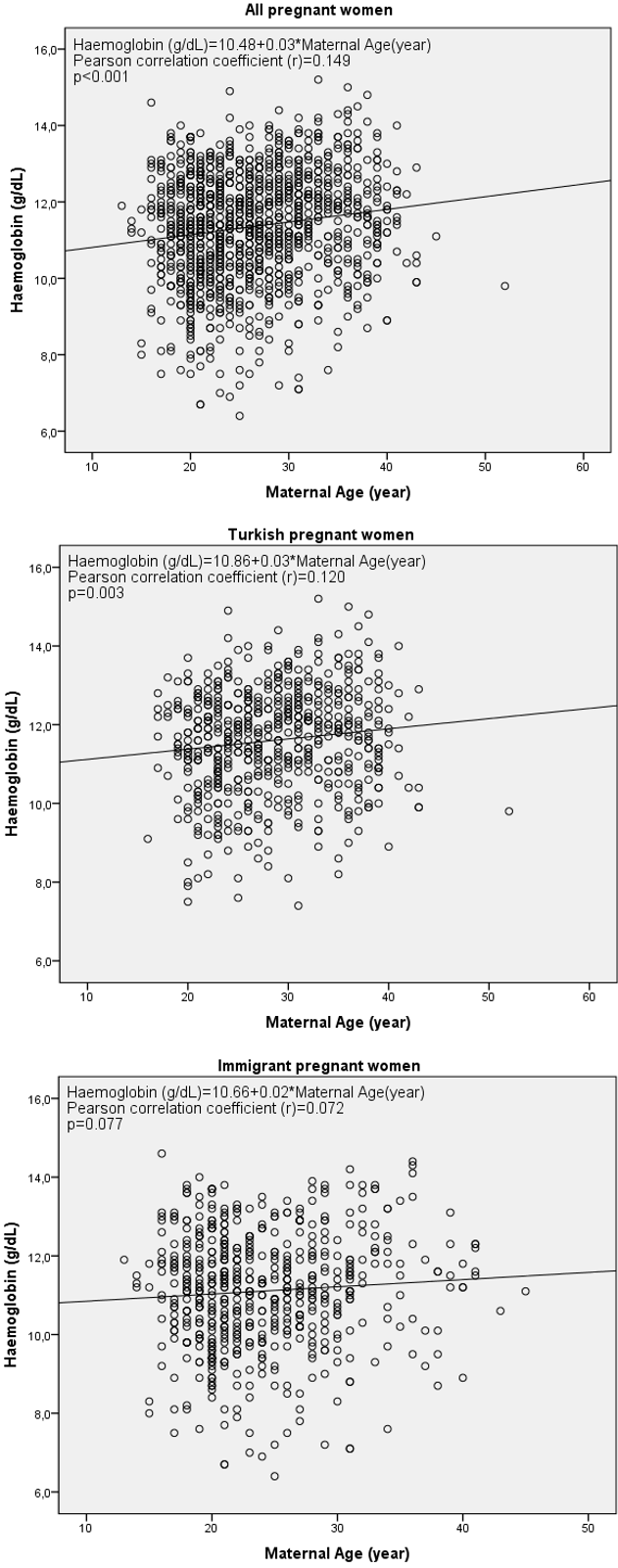
The mean maternal age was lower among pregnant women with anaemia than among those without anaemia (25.49±6.20 vs. 26.86±6.42, p<0.001). Although a statistically significant association was observed in the overall population and among Turkish women, no clinically meaningful correlation was observed (Figure 1).
The maternal anaemia was more frequent among multiparous women than primiparous women (39.1% vs. 29.0%, p=0.001). No significant differences were observed between pregnant women with and without anaemia with respect to singleton or multifetal pregnancy, preterm birth, or mode of delivery (Table 4).
| *Chi-square test. OR: Odds ratio, CI: Confidence Intervals. Unit of analysis: 1,216 pregnant women. | |||
| Table 4. The obstetric histories of pregnant women according to anaemia. | |||
|
|
|
|
|
| Primiparous pregnant women, n (%) |
|
|
|
| Multiparous pregnant women, n (%) |
|
|
|
| Singleton pregnancy, n (%) |
|
|
|
| Multifetal pregnancy, n (%) |
|
|
|
| ≥ 37 weeks of gestation, n (%) |
|
|
|
| < 37 weeks of gestation, n (%) |
|
|
|
| Vaginal delivery, n (%) |
|
|
|
| Caesarean delivery, n (%) |
|
|
|
In multivariable logistic regression analysis for maternal anaemia, migration status (OR=1.63, 95% CI: 1.26–2.10; p<0.001), maternal age (OR=0.96, 95% CI: 0.94–0.98; p<0.001), and multiparity (OR=2.09, 95% CI: 1.57–2.79; p<0.001) were independently associated with maternal anaemia. Specifically, immigrant women and multiparous women had higher odds of maternal anaemia, whereas increasing maternal age was associated with lower odds of maternal anaemia. The area under the curve (AUC) of this model was 0.631 (Table 5).
| *Multivariable logistic regression. B: regression coefficient, SE: standard error, Z: Z statistic, OR: Odds ratio, CI: Confidence Intervals. Area under the ROC curve (AUC): 0.631. Unit of analysis: 1,216 pregnant women. | |||||
| Table 5. Multivariate logistic regression analysis for anaemia. | |||||
|
|
|
|
|
|
|
| Migration status |
|
|
|
|
|
| Maternal age |
|
|
|
|
|
| Multiparity |
|
|
|
|
|
The prevalence of LBW was 12.7% among women with anaemia and 15.7% among women without anaemia (p=0.161). Likewise, the proportion of newborns with low 5th-minute Apgar scores did not differ according to maternal anaemia status (15.7% vs. 16.2%, p=0.825) (Table 6).
| *Chi-square test. Unit of analysis: 1,205 live-born infants corresponding to 1,205 pregnancies. In multiple pregnancies, one newborn was randomly selected per mother. | |||
| Table 6. The birth information of newborns according to anaemia. | |||
|
|
|
|
|
| ≥ 2,500 g birth weight, n (%) |
|
|
|
| < 2,500 g birth weight, n (%) |
|
|
|
| 5th-minute Apgar score ≥ 7, n (%) |
|
|
|
| 5th-minute Apgar score < 7, n (%) |
|
|
|
In multivariable logistic regression analysis, gestational age, parity, and multifetal pregnancy were independently associated with neonatal birth weight. Each additional week of gestation was associated with higher odds of delivering a newborn with normal birth weight (OR=2.22, 95% CI: 1.97–2.49; p<0.001). Multiparous women had higher odds of delivering a newborn with normal birth weight compared with primiparous women (OR= 2.05, 95% CI: 1.22–3.45; p=0.007). In contrast, multifetal pregnancies were associated with substantially lower odds of normal birth weight (OR=0.05, 95% CI: 0.01–0.17; p<0.001). Maternal anaemia, migration status, maternal age, and the anaemia–migration interaction term were not independently associated with neonatal birth weight. The AUC for this model was 0.891 (Table 7).
| *Multivariable logistic regression. B: regression coefficient, SE: standard error, Z: Z statistic, OR: Odds ratio, CI: Confidence Intervals. Area under the ROC curve (AUC): 0.891. Unit of analysis: 1,205 live-born infants corresponding to 1,205 pregnancies. In multiple pregnancies, one newborn was randomly selected per mother. | |||||
| Table 7. Multivariate logistic regression analysis for low birth weight. | |||||
|
|
|
|
|
|
|
| Migration status |
|
|
|
|
|
| Maternal age |
|
|
|
|
|
| Gestational age (weeks) |
|
|
|
|
|
| Multiparity |
|
|
|
|
|
| Multifetal pregnancy |
|
|
|
|
|
| Anaemia |
|
|
|
|
|
| Anaemia x Migration status |
|
|
|
|
|
Discussion and Conclusion
In this study, maternal anaemia assessed at delivery was more prevalent among immigrant pregnant women than Turkish pregnant women and was independently associated with migration status, a younger maternal age, and multiparity. In addition, immigrant women experienced significantly higher stillbirth rates despite receiving care within the same healthcare system. In contrast, maternal anaemia was not independently associated with neonatal outcomes evaluated in this study, including low birth weight and low 5-minute Apgar scores. These findings suggest that maternal anaemia in this population may be more closely linked to social and reproductive determinants than to the neonatal outcomes evaluated in the present study.
This study found that the mean age of immigrant pregnant women was lower than that of Turkish pregnant women. The researchers may have arrived at this conclusion based on the belief that early marriages provide social protection for immigrant women.[12] Erenel et al.[13] observed that the maternal age was younger in the immigrant population, and adolescent pregnancy rates were high in their study. They attributed this result to sociocultural differences.[13] When the obstetric histories of the pregnant women were examined, the caesarean delivery rate was higher in Turkish pregnant women. This study was conducted in a tertiary healthcare institution. High-risk Turkish pregnancies were monitored more closely, leading to the perception that the rates of caesarean sections were elevated. The higher rates of systemic disease in Turkish pregnant women and the indications for caesarean section in our study support this result. Although previous studies have reported higher rates of emergency caesarean sections due to lower health literacy levels among pregnant immigrant women, our study found that a previous caesarean section was the most common indication for caesarean delivery.[14]
The evaluation of the blood parameters of the pregnant women revealed a mean Hb level exceeding 11 g/dl. In our study, Hb and Hct levels of Turkish pregnant women were significantly higher compared to the levels of immigrant pregnant women. It was observed that similarly, significantly higher Hb and Hct levels were found in Turkish pregnant women in the studies of Inal et al.[15], while Turkay et al.[16] reported no significant difference between these two groups. In addition, 28.7% of Turkish pregnant women and 42.8% of immigrant pregnant women had anaemia. The higher prevalence of anaemia observed among immigrant women in this study is consistent with previous research conducted in Türkiye and other host countries.[17] The studies have attributed this situation to nutritional deficiencies, lower socioeconomic status, limited health literacy, and barriers to accessing antenatal care.[16,18] Iron supplementation therapy is given to prevent anaemia in pregnant women in Türkiye. The high prevalence of anaemia in immigrant pregnant women indicates insufficient access to antenatal care.[19] Therefore, due to the limited health literacy among migrants, it becomes even more crucial to provide adequate information.[20] However, it has been found that the language barrier not only leads to “misunderstanding” but also to misdiagnosis and incorrect treatment due to a lack of professional interpreters.[21] The Ministry of Health in Türkiye provides interpreting services in health care facilities to address the language issue faced by immigrants.
Neonatal anthropometric outcomes, including birth weight, length, and head circumference, were similar between Turkish and immigrant newborns. However, the stillbirth rate was substantially higher among immigrant women. This finding is consistent with previous evidence indicating that migrant populations in Europe experience an increased burden of stillbirth and adverse perinatal outcomes. Andersen et al.[22] reported that the elevated risk of stillbirth among migrant women may be partly explained by differences in congenital anomaly prevalence, as well as disparities in access to and utilization of antenatal care services. Similarly, a recent systematic review and meta-analysis by Behboudi-Gandevani et al.[23] demonstrated that immigrant women had a significantly higher risk of stillbirth, perinatal mortality, and neonatal mortality compared with native-born populations. These inequalities have been attributed not only to socioeconomic disadvantage but also to delayed access to obstetric care, language barriers, limited health literacy, and challenges in navigating healthcare systems.[22,23] Although the underlying causes of stillbirth could not be determined in the present study because of its retrospective design, the observed disparity highlights the importance of strengthening culturally responsive antenatal care services and ensuring equitable access to perinatal healthcare for vulnerable migrant populations. Addressing these structural barriers may be essential for reducing preventable adverse pregnancy outcomes and improving maternal and neonatal health equity.
The overall prevalence of LBW in our study was 14.6%, which was higher than the 11.9% prevalence reported in the 2018 Türkiye Demographic and Health Survey.[24] Maternal risk factors for LBW include smoking, alcohol, and substance use, particularly in high-income settings.[25] Additional established determinants include adolescent or advanced maternal age, low socioeconomic status, low pre-pregnancy body mass index, inadequate gestational weight gain, hypertensive disorders of pregnancy, and short interpregnancy interval.[26] Nevertheless, LBW was numerically less frequent among immigrant newborns than among Turkish newborns (12.7% vs. 16.4%). This finding may be compatible with certain aspects of the healthy migrant effect, whereby some recently arrived immigrant populations experience more favourable birth outcomes than expected, despite socioeconomic disadvantage.[6] However, the higher prevalence of maternal anaemia and stillbirth among immigrant women suggests that this framework alone is insufficient to explain the maternal and neonatal health patterns observed in our study.
In our study, women with maternal anaemia were younger on average, and both younger maternal age and multiparity remained independently associated with maternal anaemia in multivariable analyses. Adolescent pregnancy and short inter-pregnancy intervals are known to be risk factors for anaemia.[27,28] Among women in refugee communities, early marriage has been found to be seen as a “protective mechanism” or a means of escaping economic hardship. It has also been stated that “husband’s consent” and “religious/cultural beliefs” are decisive in accessing family planning methods, and women have limited say over their own reproductive rights.[12] Therefore, it can be considered that immigrants’ access to protective social rights directly influences health outcomes. The higher crude prevalence of anaemia among multiparous women may be explained by cumulative nutritional depletion associated with repeated pregnancies. Previous studies have reported higher rates of anaemia and iron deficiency among multiparous women, suggesting progressive depletion of maternal iron reserves with increasing parity.[29] In addition, short interpregnancy intervals may prevent adequate restoration of iron stores before a subsequent conception, thereby increasing vulnerability to anaemia in later pregnancies.[30]
In our study, maternal anaemia was not independently associated with LBW or low 5-minute Apgar scores. One possible explanation is that maternal haemoglobin concentrations were measured at the time of admission for delivery rather than earlier in pregnancy, whereas fetal growth is influenced by exposures occurring throughout gestation. Consequently, haemoglobin levels assessed at delivery may not adequately reflect maternal physiological conditions during the critical periods of fetal development. Furthermore, because the study relied on routinely collected retrospective data, important factors such as adherence to iron supplementation, maternal nutritional status, smoking, and the adequacy of antenatal care could not be evaluated. Therefore, the timing of haemoglobin assessment and the limitations of the available data may have reduced the ability of this study to adequately evaluate the relationship between maternal anaemia and neonatal outcomes.
In the multivariable analysis, gestational age, parity, and multifetal pregnancy emerged as the only factors independently associated with neonatal birth weight. The positive association between increasing gestational age and normal birth weight is consistent with the well-established contribution of prematurity to reduced birth weight and adverse neonatal outcomes. Similarly, the lower odds of normal birth weight observed among multifetal pregnancies are consistent with previous evidence indicating that fetal growth restriction is a common complication of twin pregnancies and contributes substantially to adverse neonatal outcomes.[31] In addition, multiparity was associated with higher odds of delivering a newborn with normal birth weight. This finding is in agreement with previous studies demonstrating that infants born to nulliparous women are more likely to have lower birth weight than those born to multiparous women. In a large multicountry cohort study conducted in low- and middle-income settings, Garces et al. reported[32] that nulliparity was independently associated with lower birth weight and higher neonatal mortality, even after adjustment for maternal and socioeconomic factors. More recently, Wijesiriwardhana et al.[33] showed that birthweight-reducing maternal genetic influences predominantly affected fetal growth among nulliparous women, whereas these associations were not observed among multiparous women, suggesting that prior pregnancies may induce physiological adaptations that support subsequent fetal growth. Several mechanisms have been proposed to explain this relationship, including improved uteroplacental perfusion, enhanced cardiovascular adaptation, and immunological tolerance acquired through previous pregnancies.[32,33] Therefore, the higher odds of normal birth weight observed among multiparous women in our study may reflect these cumulative physiological adaptations rather than parity itself acting as an isolated protective factor. In contrast, maternal anaemia and migration status were not independently associated with birth weight after adjustment for potential confounders. These findings underscore the multifactorial nature of birth weight and emphasize the necessity of taking into account a broad range of maternal and obstetric factors when evaluating neonatal outcomes.
Limitations of this study include its retrospective design, whereby maternal Hb levels were based on blood tests performed at hospital admission for delivery, while Hb measurements during routine antenatal follow-up were unavailable. Data on iron supplementation, treatment adherence, dietary iron intake, and other micronutrient statuses were also lacking. In addition, several potential confounders, including maternal body mass index, smoking, alcohol use, chronic diseases, education, household income, and other socioeconomic factors, were not available in the hospital database and could not be included in the analyses. Finally, because of the observational design, causal inferences cannot be made, and the findings should be interpreted as associations rather than direct causal effects.
In conclusion, maternal anaemia assessed at delivery was more common among immigrant women and was independently associated with migration status, younger maternal age, and multiparity. Although immigrant women exhibited a higher burden of maternal anaemia, maternal anaemia was not independently associated with the neonatal outcomes evaluated in this study, including low birth weight and low 5-minute Apgar scores. Because haemoglobin concentrations were measured at the time of delivery rather than during pregnancy, these findings should not be interpreted as evidence against a potential relationship between antenatal anaemia and adverse neonatal outcomes. Despite comparable neonatal anthropometric outcomes between Turkish and immigrant newborns, the significantly higher stillbirth rate observed among immigrant women highlights persistent inequalities in perinatal health. These disparities may reflect broader social and structural determinants, including barriers to antenatal care utilisation and access to timely obstetric services. Overall, the findings emphasise the importance of culturally responsive, equity-orientated maternal healthcare approaches that address both biomedical and social determinants of health.
Ethical approval
This study has been approved by the İzmir Tepecik Training and Research Hospital Ethics Committee (approval date 07.03.2017, number 18).
Source of funding
The authors declare the study received no funding.
Conflict of interest
The authors declare that there is no conflict of interest to disclose.
Referanslar
- World Health Organization (WHO). WHO global anaemia estimates: key findings, 2025. Geneva: WHO; 2025. https://iris.who.int/server/api/core/bitstreams/ffbc07c6-420c-4711-8589-2a7b6f3a3da2/content (Accessed on Apr 28, 2026).
- Malhotra M, Sharma JB, Batra S, Sharma S, Murthy NS, Arora R. Maternal and perinatal outcome in varying degrees of anemia. Int J Gynaecol Obstet. 2002;79(2):93-100. https://doi.org/10.1016/s0020-7292(02)00225-4
- Republic of Türkiye Ministry of Health. Gebelerde Demir Destek Programı Uygulaması Genelgesi, 2007/6. Republic of Türkiye Ministry of Health; 2007. Available at: https://www.saglik.gov.tr/TR-11100/gebelerde-demir-destek-programi-uygulumasi-genelgesi-2007--6.html (Accessed on Feb 4, 2026).
- Johnson DN, Harris JR, Flatø M. Social Influences on maternal health: a norwegian register-based study. Paediatr Perinat Epidemiol. 2025;39(3):265-273. https://doi.org/10.1111/ppe.13167
- Glossary on migration. Geneva: International Organization For Migration; 2019 https://publications.iom.int/system/files/pdf/iml_34_glossary.pdf (Accessed on Apr 28, 2026).
- Villalonga-Olives E, Kawachi I, von Steinbüchel N. Pregnancy and birth outcomes among immigrant women in the US and Europe: a systematic review. J Immigr Minor Health. 2017;19(6):1469-1487. https://doi.org/10.1007/s10903-016-0483-2
- Egli-Gany D, Aftab W, Hawkes S, et al. The social and structural determinants of sexual and reproductive health and rights in migrants and refugees: a systematic review of reviews. East Mediterr Health J. 2021;27(12):1203-1213. https://doi.org/10.26719/emhj.20.101
- World Health Organization (WHO). Guideline on haemoglobin cutoffs to define anaemia in individuals and populations. Geneva: WHO; 2024. Available at: https://iris.who.int/server/api/core/bitstreams/f9f74397-1440-478d-a63c-26f29a01552f/content (Accessed on Apr 28, 2026).
- Tabassum S, Khakwani M, Fayyaz A, Taj N. Role of mentzer index for differentiating iron deficiency anemia and beta thalassemia trait in pregnant women. Pak J Med Sci. 2022;38(4):878-882. https://doi.org/10.12669/pjms.38.4.4635
- Blanc AK, Wardlaw T. Monitoring low birth weight: an evaluation of international estimates and an updated estimation procedure. Bull World Health Organ. 2005;83(3):178-185.
- Kattwinkel J, editor. Texto Reanimación Neonatal: 2010 American Academy of Pediatrics and American Heart Association Guidelines for Neonatal Resuscitation. 6th ed. Elk Grove Village (IL): American Academy of Pediatrics; 2011. https://doi.org/10.1542/9781581106299
- Döner P, Şahin K. "This is not my decision; I have no alternative". Perceptions and experiences of marriage age and family planning among Syrian women and men: a primary care study. Prim Health Care Res Dev. 2021;22:e25. https://doi.org/10.1017/S1463423621000220
- Erenel H, Aydogan Mathyk B, Sal V, Ayhan I, Karatas S, Koc Bebek A. Clinical characteristics and pregnancy outcomes of Syrian refugees: a case-control study in a tertiary care hospital in Istanbul, Turkey. Arch Gynecol Obstet. 2017;295(1):45-50. https://doi.org/10.1007/s00404-016-4188-5
- Schlothauer D, Teschemacher L, Breckenkamp J, et al. Perinatal outcome of immigrant women with and without refugee status compared to non-immigrant women: results of the pregnancy and obstetric care for refugees (PROREF) cross-sectional study. Arch Gynecol Obstet. 2024;310(5):2413-2424. https://doi.org/10.1007/s00404-024-07639-3
- Inal HA, Inal ZO. Comparison of perinatal outcomes between Syrian refugees and Turkish women in the Middle Anatolia Region of Turkey. Matern Child Health J. 2023;27(12):2139-2146. https://doi.org/10.1007/s10995-023-03748-8
- Turkay Ü, Aydın Ü, Salıcı M, et al. Comparison of pregnant Turkish women and Syrian refugees: does living as a refugee have an unfavorable effect on pregnancy outcomes? Int J Gynaecol Obstet. 2020;149(2):160-165. https://doi.org/10.1002/ijgo.13117
- Hakimi S, Turfan EC, Allahqoli L, et al. Maternal and newborn health inequality among Syrian refugees in Turkey: a systematic review and meta-analysis. Int J Equity Health. 2025;24(1):160. https://doi.org/10.1186/s12939-025-02506-2
- Davidson MB, Brown G, Street L, et al. Iron deficiency, anemia and association with refugee camp exposure among recently resettled refugees: a Canadian retrospective cohort study. PLoS One. 2022;17(12):e0278838. https://doi.org/10.1371/journal.pone.0278838
- Altaş ZM, Sezerol MA. Investigation of usage of antenatal care services by Syrian immigrant pregnant women and the frequency of anaemia and hypertension during the pandemic. J Biosoc Sci. 2024;56(6):984-997. https://doi.org/10.1017/S0021932024000348
- Ferreira N, Ferreira M, Santos E, Ferreira S, de Arriaga MT, Costa A. Health literacy and its determinants among pregnant women in Portugal. BMC Public Health. 2025;25(1):2963. https://doi.org/10.1186/s12889-025-24225-7
- Barrio-Ruiz C, Ruiz de Viñaspre-Hernandez R, Colaceci S, et al. Language and cultural barriers and facilitators of sexual and reproductive health care for migrant women in high-income European countries: an integrative review. J Midwifery Womens Health. 2024;69(1):71-90. https://doi.org/10.1111/jmwh.13545
- Nybo Andersen AM, Gundlund A, Villadsen SF. Stillbirth and congenital anomalies in migrants in Europe. Best Pract Res Clin Obstet Gynaecol. 2016;32:50-59. https://doi.org/10.1016/j.bpobgyn.2015.09.004
- Behboudi-Gandevani S, Bidhendi-Yarandi R, Panahi MH, et al. A systematic review and meta-analysis of the risk of stillbirth, perinatal and neonatal mortality in immigrant women. Int J Public Health. 2022;67:1604479. https://doi.org/10.3389/ijph.2022.1604479
- Hacettepe University Institute of Population Studies. 2018 Turkey Demographic and Health Survey. Ankara: Hacettepe University Institute of Population Studies, Republic of Türkiye Ministry of Health and TÜBİTAK; 2019. Report No.: IPS-HU.19.02. Available at: https://fs.hacettepe.edu.tr/hips/dosyalar/Ara%C5%9Ft%C4%B1rmalar%20-%20raporlar/2018%20TNSA/TDHS2018_mainReport_compressed.pdf (Accessed on Feb 4, 2026).
- Bandyopadhyay A, Jones H, Parker M, et al. Weighting of risk factors for low birth weight: a linked routine data cohort study in Wales, UK. BMJ Open. 2023;13(2):e063836. https://doi.org/10.1136/bmjopen-2022-063836
- Özgen D, Şahin S. Düşük doğum ağırlıklı bebeklerin annelerinin karakteristik özellikleri. Journal of Human Rhythm. 2016;2(2):72-77.
- Wiafe MA, Ayenu J, Eli-Cophie D. A review of the risk factors for iron deficiency anaemia among adolescents in developing countries. Anemia. 2023;2023:6406286. https://doi.org/10.1155/2023/6406286
- Bano B, Tasneem S, Mubeen S, Ishaq S, Akram N. Inter-pregnancy interval: a clincher for obstetric outcome. Journal of the Society of Obstetricians and Gynaecologists of Pakistan. 2025;15(4):224-228. https://doi.org/10.71104/jsogp.v15i4.958
- Imai K. Parity-based assessment of anemia and iron deficiency in pregnant women. Taiwan J Obstet Gynecol. 2020;59(6):838-841. https://doi.org/10.1016/j.tjog.2020.09.010
- Weiss A, Sela HY, Grisaru-Granovsky S, Rottenstreich M. Short interpregnancy interval following a multifetal pregnancy: maternal and neonatal outcomes. J Clin Med. 2023;12(7):2576. https://doi.org/10.3390/jcm12072576
- Filipecka-Tyczka D, Jakiel G, Kajdy A, Rabijewski M. Is growth restriction in twin pregnancies a double challenge? A narrative review. J Mother Child. 2021;24(4):24-30.
- Garces A, Perez W, Harrison MS, et al. Association of parity with birthweight and neonatal death in five sites: the global network's maternal newborn health registry study. Reprod Health. 2020;17(Suppl 3):182. https://doi.org/10.1186/s12978-020-01025-3
- Wijesiriwardhana P, Habtewold TD, Wang G, et al. Maternal parity modifies the association of birthweight polygenic score with fetal growth. Sci Rep. 2025;15(1):27915. https://doi.org/10.1038/s41598-025-10415-1
Telif hakkı ve lisans
Telif Hakkı © 2026 Yazar(lar). Açık erişimli bu makale, orijinal çalışmaya uygun şekilde atıfta bulunulması koşuluyla, herhangi bir ortamda veya formatta sınırsız kullanım, dağıtım ve çoğaltmaya izin veren Creative Commons Attribution License (CC BY) altında dağıtılmıştır.